How to Choose the Right Spiral Tube for EMI Shielding: A Complete Selection Guide
Learn how to choose the right spiral tube for EMI shielding applications. Discover key factors including material selection, compression force, conductivity, environmental resistance, and industry-specific design requirements.
How to Choose the Right Spiral Tube for EMI Shielding: A Complete Selection Guide
Introduction
As electronic systems become smaller, faster, and more powerful, electromagnetic interference (EMI) has become a critical engineering challenge across industries such as aerospace, telecommunications, medical equipment, automotive electronics, and defense systems.
One of the most effective solutions for EMI shielding in demanding environments is the spiral tube spring contact. Known for its excellent electrical conductivity, reliable mechanical resilience, and long service life, the spiral tube is widely used in shielding enclosures, connector systems, grounding applications, and conductive sealing systems.
However, selecting the correct spiral tube for EMI shielding is not simply a matter of choosing a size. Engineers must carefully evaluate electrical performance, environmental conditions, compression characteristics, plating options, and installation requirements.
This guide explains how to choose the right spiral tube for your EMI shielding application.
What Is a Spiral Tube for EMI Shielding?
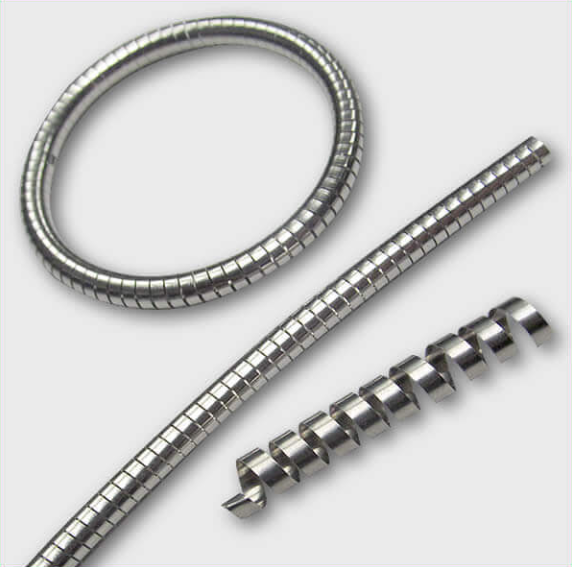
A spiral tube is a continuous coiled metallic spring structure designed to provide:
- Electrical conductivity
- EMI/RFI shielding
- Grounding continuity
- Mechanical compliance
- Repeated compression performance
Unlike traditional finger stock contacts or solid gaskets, spiral tubes offer multi-point conductive contact with low contact resistance and consistent spring force.
Typical EMI Shielding Applications
- Shielded electronic enclosures
- Aerospace avionics
- RF communication systems
- Medical electronics
- Military equipment
- Battery grounding systems
- Connector grounding
- Conductive panel interfaces
Why Spiral Tubes Are Effective for EMI Shielding
1. Continuous Conductive Path
The spiral structure creates multiple conductive contact points along the mating surface, improving shielding effectiveness.
2. Excellent Compression Recovery
Spiral tubes maintain spring force after repeated compression cycles, ensuring long-term shielding reliability.
3. Low Contact Resistance
High-quality conductive materials and plating reduce electrical resistance between mating surfaces.
4. Vibration Resistance
The elastic structure absorbs shock and vibration while maintaining electrical continuity.
5. Adaptability to Complex Designs
Spiral tubes can be customized into various diameters, wire sizes, and configurations for different groove and enclosure designs.
Key Factors When Choosing a Spiral Tube for EMI Shielding
1. Determine the Required Shielding Effectiveness
Shielding effectiveness is usually measured in decibels (dB).
Typical requirements include:
| Industry | Typical EMI Shielding Requirement |
|---|---|
| Commercial Electronics | 40–60 dB |
| Telecommunications | 60–80 dB |
| Aerospace & Defense | 80–120 dB |
| Medical Devices | 60–100 dB |
Higher-frequency environments generally require tighter conductive continuity and lower contact resistance.
2. Select the Correct Material
Material selection directly affects:
- Conductivity
- Corrosion resistance
- Mechanical strength
- Temperature capability
- Fatigue life
Common Spiral Tube Materials
| Material | Advantages | Typical Applications |
|---|---|---|
| Stainless Steel | Corrosion resistant, durable | General industrial |
| Beryllium Copper | Excellent conductivity and spring properties | High-performance EMI shielding |
| Elgiloy® | High fatigue resistance | Aerospace and defense |
| MP35N® | Excellent corrosion and strength | Marine and medical |
| Inconel® | High-temperature resistance | Aerospace engines |
Material Selection Tips
- Choose beryllium copper when conductivity is the priority.
- Use stainless steel when corrosion resistance matters more than conductivity.
- Select Elgiloy® or MP35N® for extreme reliability applications.
3. Evaluate Plating Options
Plating significantly improves electrical performance and corrosion resistance.
Common EMI Shielding Platings
| Plating | Benefits |
|---|---|
| Silver | Excellent conductivity |
| Gold | Superior corrosion resistance |
| Nickel | Wear resistance |
| Tin | Cost-effective conductivity |
Recommended Plating by Environment
| Environment | Recommended Plating |
|---|---|
| Aerospace | Gold or silver |
| Marine | Gold or nickel |
| Industrial | Nickel or tin |
| High-frequency RF | Silver |
4. Understand Compression Requirements
Proper compression is critical for maintaining effective EMI shielding.
Too little compression may cause:
- Poor electrical contact
- Increased EMI leakage
- Unstable grounding
Too much compression may result in:
- Permanent deformation
- Reduced spring life
- Increased insertion force
Typical Compression Range
Most spiral tubes operate best within:
15% to 30% compression15\% \text{ to } 30\% \text{ compression}15% to 30% compression
The optimal compression depends on:
- Wire diameter
- Tube geometry
- Material stiffness
- Required shielding performance
5. Consider Contact Resistance Requirements
Low contact resistance improves shielding performance and grounding reliability.
Factors affecting contact resistance include:
- Base material conductivity
- Surface plating
- Contact force
- Surface finish
- Environmental contamination
Typical Contact Resistance Targets
| Application | Contact Resistance |
|---|---|
| Standard EMI Shielding | < 100 mΩ |
| High-Performance RF | < 20 mΩ |
| Aerospace Systems | < 10 mΩ |
6. Analyze Environmental Conditions
Environmental exposure strongly influences spiral tube selection.
Important Environmental Factors
Temperature
High temperatures may reduce spring elasticity.
| Material | Typical Temperature Capability |
|---|---|
| Stainless Steel | Up to 300°C |
| Elgiloy® | Up to 450°C |
| Inconel® | Up to 700°C |
Corrosion
Salt spray, humidity, and chemicals can damage conductive surfaces.
Vibration & Shock
Dynamic environments require materials with high fatigue resistance.
Vacuum or Space Applications
Low outgassing materials may be required for aerospace systems.
7. Match the Groove and Installation Design
Proper groove design ensures stable positioning and reliable contact.
Groove Design Considerations
- Groove width
- Groove depth
- Compression ratio
- Installation tolerance
- Mating surface flatness
Improper groove dimensions may lead to:
- Uneven compression
- EMI leakage
- Premature wear
- Contact instability
8. Evaluate Shielding Frequency Range
Different frequencies require different shielding strategies.
Frequency Performance Overview
| Frequency Range | Shielding Challenge |
|---|---|
| Low Frequency | Magnetic field penetration |
| Mid Frequency | Conducted interference |
| High Frequency | Surface leakage and gaps |
For high-frequency applications, continuous conductive contact becomes especially important.
Spiral Tube vs Other EMI Shielding Solutions
| Solution | Advantages | Limitations |
|---|---|---|
| Spiral Tube | Durable, low resistance, long life | Higher precision required |
| Finger Stock | Easy installation | Fatigue over time |
| Conductive Elastomer | Environmental sealing | Higher resistance |
| Wire Mesh Gasket | Flexible | Lower durability |
Industry-Specific Selection Recommendations
Aerospace
Recommended Features:
- Silver or gold plating
- Lightweight high-performance alloys
- High vibration resistance
- Low contact resistance
Medical Devices
Recommended Features:
- Biocompatible materials
- Stable conductivity
- Corrosion resistance
- Precision miniaturization
Telecommunications
Recommended Features:
- High-frequency shielding capability
- Low insertion force
- Long cycle durability
Automotive Electronics
Recommended Features:
- Temperature resistance
- Vibration durability
- Cost-effective plating
Common Mistakes When Selecting Spiral Tubes
Choosing Based Only on Size
Electrical performance matters as much as physical dimensions.
Ignoring Plating Compatibility
Incompatible metals may cause galvanic corrosion.
Excessive Compression
Over-compression reduces spring lifespan.
Underestimating Environmental Exposure
Humidity and chemicals can rapidly degrade conductivity.
Failing to Prototype Test
Real-world EMI testing is essential before mass production.
Best Practices for EMI Shielding Spiral Tube Design
Work With Custom Engineering Support
Customized solutions often provide significantly better shielding performance.
Validate Through EMI Testing
Testing should include:
- Shielding effectiveness
- Contact resistance
- Compression cycling
- Environmental aging
- Vibration resistance
Consider Long-Term Reliability
The lowest-cost option may fail earlier under harsh conditions.
Future Trends in EMI Shielding Spiral Tubes
The future of EMI shielding technology is moving toward:
- Miniaturized electronics
- Higher-frequency communication
- Lightweight aerospace systems
- Electric vehicle electronics
- Advanced conductive coatings
- Hybrid conductive materials
As EMI requirements become more demanding, precision-engineered spiral tubes will continue to play a critical role in reliable electronic system design.
Conclusion
Choosing the right spiral tube for EMI shielding requires balancing electrical performance, mechanical reliability, environmental resistance, and installation requirements.
The ideal solution depends on:
- Shielding effectiveness targets
- Material conductivity
- Compression characteristics
- Operating environment
- Frequency range
- Durability expectations
By carefully evaluating these factors and performing real-world validation testing, engineers can significantly improve EMI shielding reliability and long-term system performance.
High-quality spiral tube solutions not only reduce electromagnetic interference but also enhance grounding stability, equipment durability, and overall product reliability across critical industries.