Leitfähiger Aluminium-Folienschaum: Der komplette technische Leitfaden zur EMI-Abschirmung, Materialien und Anwendungen
Leitfähiger Aluminium-Folienschaum: In der sich ständig weiterentwickelnden Landschaft elektronischer Geräte ist die elektromagnetische Interferenz (EMI) zu einer entscheidenden Herausforderung für das Design geworden. Von Smartphones und Automobilelektronik bis hin zu medizinischen Implantaten und Luft- und Raumfahrtsystemen ist die Kontrolle unerwünschter elektromagnetischer Energie für einen zuverlässigen Betrieb und die Einhaltung gesetzlicher Vorschriften unerlässlich.
Es gibt verschiedene Lösungen zur EMI-Abschirmung, leitfähiger Aluminiumfolienschaum hat sich als vielseitige, leichte und kostengünstige Option herausgestellt. In diesem umfassenden Leitfaden werden die technischen Prinzipien hinter leitfähigem Aluminiumfolienschaum, seine Materialzusammensetzung, die wichtigsten Anwendungen und die Auswahl des richtigen Produkts für Ihre spezifischen Anforderungen erläutert.
Was ist leitfähiger Aluminium-Folienschaum?
Leitfähiger Aluminiumfolienschaum ist ein Verbundabschirmungsmaterial, das aus drei Hauptschichten besteht:
| Ebene | Material | Funktion |
|---|---|---|
| Leitende Schicht | Alufolie | Bietet primäre EMI-Abschirmung durch Reflexion und Absorption |
| Kernschicht | Polyurethan- oder Polyethylenschaum | Bietet Komprimierbarkeit, Elastizität und die Fähigkeit, Lücken zu schließen |
| Klebeschicht | Leitfähiger oder nicht leitfähiger Klebstoff | Gewährleistet eine sichere Befestigung an den Gehäuseoberflächen |
Die Aluminiumfolie bietet eine hervorragende elektrische Leitfähigkeit, während der Schaumstoffkern es der Dichtung ermöglicht, sich an unregelmäßige Oberflächen anzupassen, Toleranzen auszugleichen und einen gleichmäßigen Anpressdruck aufrechtzuerhalten. Diese Kombination macht Aluminiumfolienschaumdichtungen ideal für Anwendungen, die sowohl Abschirmungseffektivität als auch mechanische Konformität erfordern.
Wie leitfähiger Aluminium-Folienschaum zur EMI-Abschirmung funktioniert
Die EMI-Abschirmung beruht auf drei grundlegenden Prinzipien: Reflexion, Absorption und Mehrfachreflexion.
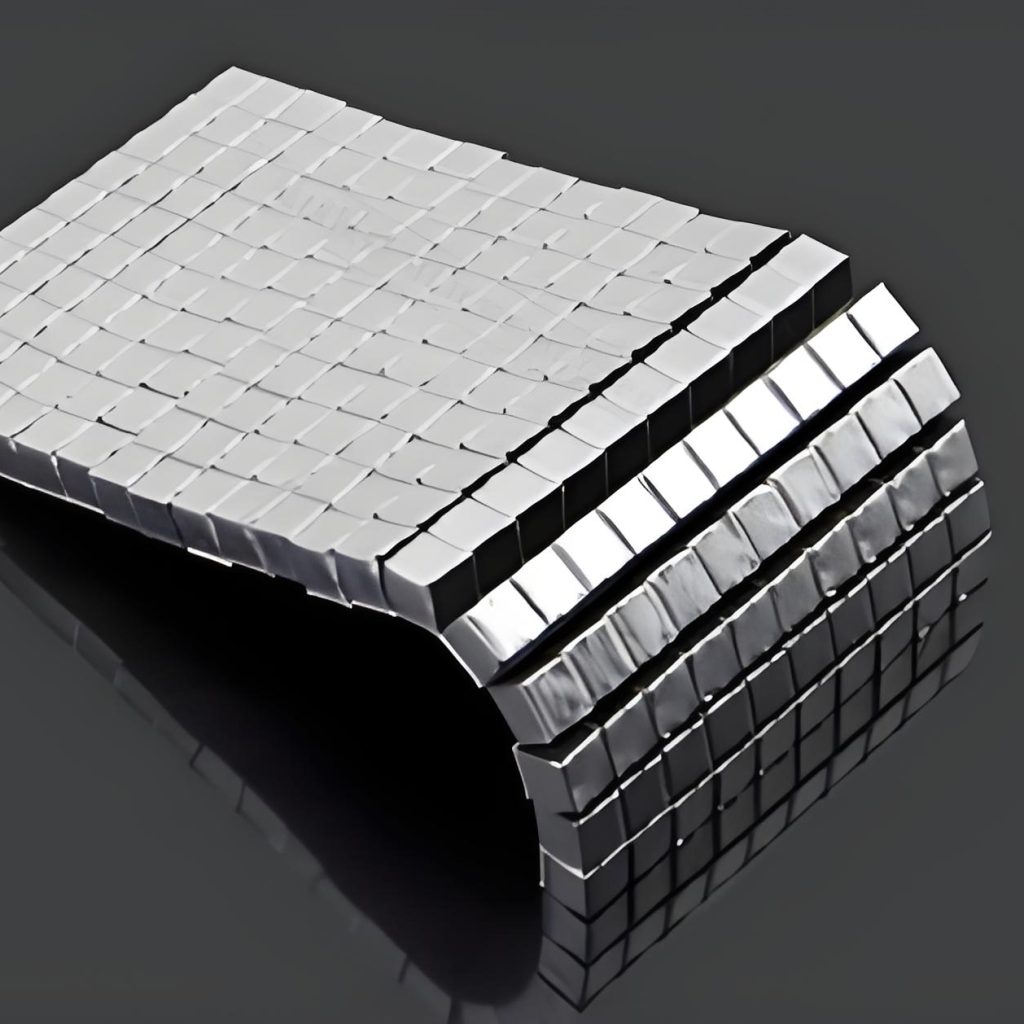
Mechanismus der Abschirmung
Wenn elektromagnetische Wellen auf ein leitendes Material wie Aluminiumfolie treffen:
- Reflexion: Ein Teil der einfallenden Welle wird aufgrund einer Impedanzfehlanpassung an der Luft-Leiter-Grenzfläche reflektiert
- Absorption: Energie, die den Leiter durchdringt, wird durch Wirbelströme in Wärme umgewandelt
- Mehrfache Reflexionen: Wellen, die zwischen den inneren Oberflächen reflektiert werden, erfahren eine weitere Abschwächung
Wirksamkeit der Abschirmung (SE) wird in Dezibel (dB) ausgedrückt und entspricht der folgenden Formel:
SE = R + A + B
Wo:
- R = Reflexionsverlust (hängt von der Leitfähigkeit des Materials und der Wellenimpedanz ab)
- A = Absorptionsverlust (abhängig von Materialdicke und Durchlässigkeit)
- B = Korrektur der Mehrfachreflexion (nur bei dünnen Materialien von Bedeutung)
Für Aluminiumfolien-Schaumstoffdichtungen liegt die typische Abschirmwirkung im Bereich von 60 dB bis 100 dB abhängig von der Frequenz, der Kompression und der Materialstärke.
Materialien und Konstruktion
Leitende Schicht: Alufolie
Aluminiumfolie ist das wichtigste leitende Element in diesen Dichtungen. Seine wichtigsten Eigenschaften sind:
| Eigentum | Wert | Vorteil |
|---|---|---|
| Elektrische Leitfähigkeit | ~3,5 × 10⁷ S/m | Ausgezeichnetes EMI-Reflexionsvermögen |
| Dichte | 2,7 g/cm³ | Leichtes Gewicht im Vergleich zu Kupfer (8,96 g/cm³) |
| Korrosionsbeständigkeit | Bildet schützende Oxidschicht | Geeignet für viele Umgebungen |
| Dickenbereich | 0,02 mm - 0,2 mm | Flexible Gestaltungsmöglichkeiten |
Aluminium vs. Kupfer: Während Kupfer eine höhere Leitfähigkeit aufweist, bietet Aluminium erhebliche Gewichts- und Kostenvorteile, was es zur bevorzugten Wahl für tragbare Elektronik, Automobil- und Luftfahrtanwendungen macht, bei denen das Gewicht eine wichtige Rolle spielt.
Schaumstoffkern: Komprimierbare Grundlage
Der Schaumkern bestimmt das mechanische Verhalten der Dichtung:
| Schaumstoff-Typ | Merkmale | Anwendungen |
|---|---|---|
| Polyurethan-Schaumstoff | Hervorragendes Rückstellvermögen, gute Druckverformungsresistenz | Allgemeine Industrie, Unterhaltungselektronik |
| Polyethylen-Schaumstoff | Geschlossenzellige Struktur, feuchtigkeitsbeständig | Im Freien, im Meer, in Umgebungen mit hoher Luftfeuchtigkeit |
| Silikonschaum | Großer Temperaturbereich (-55°C bis 200°C), hervorragende Haltbarkeit | Luft- und Raumfahrt, Motorräume von Kraftfahrzeugen |
Klebstoff-Optionen
Die Klebeschicht kann entweder leitend oder nicht leitend sein:
- Leitfähiger Klebstoff: Bewahrt die elektrische Kontinuität zwischen der Folie und der Montagefläche; unerlässlich für Erdungsanwendungen
- Nicht leitfähiger Klebstoff: Nur mechanische Befestigung; geeignet, wenn die Dichtung durch die Gehäusekonstruktion mechanisch zusammengedrückt wird
Wichtige Anwendungen
1. Unterhaltungselektronik
Smartphones, Tablets, Laptops und Wearables benötigen eine kompakte, leichte EMI-Abschirmung, um Interferenzen zwischen internen Komponenten zu verhindern.
Warum Alufolienschaum bevorzugt wird:
- Leichte Konstruktion bewahrt die Tragbarkeit des Geräts
- Dünne Profile passen in enge Innenräume
- Komprimierbarer Schaumstoff gleicht Montagetoleranzen aus
2. Kfz-Elektronik
Moderne Fahrzeuge enthalten Dutzende von elektronischen Steuergeräten (ECUs), Sensoren und Infotainmentsystemen, die störungsfrei nebeneinander existieren müssen.
| Komponente | Anforderung an die Abschirmung |
|---|---|
| Motorsteuergeräte | Hochtemperaturbeständigkeit, Vibrationstoleranz |
| Infotainment-Systeme | Breite Frequenzabdeckung (AM/FM, GPS, Mobilfunk) |
| ADAS-Sensoren | Gleichbleibende Leistung über den gesamten Temperaturbereich |
3. Medizinische Geräte
Medizinische Elektronik erfordert eine zuverlässige EMI-Abschirmung, um die Sicherheit der Patienten und die Genauigkeit der Diagnose zu gewährleisten.
- Bildgebende Geräte: MRI-, CT- und Röntgensysteme erfordern eine hohe Abschirmwirkung
- Implantierbare Geräte: Biokompatible Materialien und zuverlässige Leistung
- Überwachungsgeräte: Störungsfreier Betrieb in Krankenhausumgebungen
4. Luft- und Raumfahrt und Verteidigung
Avionik und Militärelektronik arbeiten in anspruchsvollen Umgebungen mit strengen Zuverlässigkeitsanforderungen.
Wichtige Überlegungen:
- Breiter Temperaturbereich möglich
- Einhaltung der Ausgasungsvorschriften (NASA- und ESA-Normen)
- Anforderungen an die Flammwidrigkeit
- Gewichtseinsparungen für die Effizienz des Flugzeugs
5. Telekommunikation
Basisstationen, Router und Netzwerkausrüstungen benötigen EMI-Dichtungen, die auch bei jahrelangem Dauerbetrieb leistungsfähig bleiben.
Auswahlkriterien: So wählen Sie den richtigen leitfähigen Aluminiumfolienschaum
Schritt 1: Definition der Abschirmungsanforderungen
| Anforderung | Betrachtung |
|---|---|
| Frequenzbereich | Alufolie ist von niedrigen Frequenzen bis zu mehreren GHz wirksam; überprüfen Sie die Leistung bei Ihren spezifischen Frequenzen |
| Wirksamkeit der Abschirmung | Bestimmung des erforderlichen dB-Pegels (in der Regel 60-100 dB für die meisten Anwendungen) |
| EMI-Quelle | Identifizieren Sie, ob die Abschirmung gegen Strahlungsemissionen oder die Anfälligkeit |
Schritt 2: Bewertung der mechanischen Anforderungen
| Parameter | Wichtige Überlegungen |
|---|---|
| Kompression Bereich | Empfohlene Kompression: 20-50% der ursprünglichen Dicke |
| Spalttoleranz | Schaumstoffkern kompensiert typischerweise 0,5-3 mm Lücken |
| Zyklus Leben | Polyurethanschaum bietet im Allgemeinen eine bessere Elastizität für wiederholte Kompressionszyklen |
| Betriebstemperatur | Wählen Sie den Schaumstofftyp nach den Temperaturextremen aus |
Schritt 3: Bewertung der Umweltbedingungen
| Umwelt | Empfohlene Materialien |
|---|---|
| Hohe Luftfeuchtigkeit | Geschlossenzelliger Polyethylenschaum, korrosionsbeständige Folie |
| Exposition im Freien | UV-stabile Materialien, Schutzbeschichtungen |
| Chemische Exposition | Konstruktionen auf Fluorpolymer- oder Silikonbasis |
| Vakuum | Gering ausgasende Materialien (Silikonschaum, Aluminium) |
Schritt 4: Klebstofftyp auswählen
| Klebstoff Typ | Am besten für |
|---|---|
| Leitfähiger Klebstoff | Anwendungen, die eine elektrische Kontinuität zur Erde erfordern |
| Nicht leitfähiger Klebstoff | Mechanisch komprimierte Dichtungen, Anwendungen mit getrennten Erdungspfaden |
Einbau und Montage
Eine ordnungsgemäße Installation gewährleistet eine optimale Abschirmungsleistung:
Vorbereitung der Oberfläche
- Reinigen Sie die Montageflächen, um Staub, Öl und Oxidation zu entfernen.
- Sicherstellen, dass die Oberflächen eben und frei von Graten sind
Leitlinien für die Kompression
- Designkompression zur Erhaltung 20-50% der ursprünglichen Dicke
- Vermeiden Sie eine zu starke Kompression, die die Schaumstruktur beschädigen kann.
- Sicherstellen einer gleichmäßigen Kompression über die gesamte Länge der Dichtung
Gängige Befestigungsmethoden
| Methode | Beschreibung | Vorteile |
|---|---|---|
| Druckempfindlicher Klebstoff (PSA) | Anwendung durch Abziehen und Aufkleben | Einfach, keine Hardware erforderlich |
| Rillenmontage | Dichtung sitzt in bearbeiteter Rille | Präzise Positionierung, mechanischer Halt |
| Mechanische Befestigungen | Klammern, Schrauben oder andere Hardware | Höchster Rückhalt, geeignet für häufigen Zugriff |
Leistungsprüfung und Validierung
Um sicherzustellen, dass leitfähige Aluminiumfolien-Schaumstoffdichtungen die Anwendungsanforderungen erfüllen, sollten Sie die folgenden Tests durchführen:
Prüfung der Wirksamkeit der Abschirmung
Durchgeführt nach Standards wie IEEE 299 oder MIL-STD-285Messung der Dämpfung über den interessierenden Frequenzbereich.
Kompression Kraft-Durchbiegung
Überprüft, ob die Dichtung die angegebene Kontaktkraft bei der vorgesehenen Kompression bietet.
Prüfung des Druckverformungsrestes
Misst die dauerhafte Verformung nach längerer Kompression - ein kritischer Parameter für die langfristige Zuverlässigkeit.
| Schaumstoff-Typ | Typischer Druckverformungsrest (25% Druck, 22h bei 70°C) |
|---|---|
| Polyurethan | < 10% |
| Polyethylen | < 5% |
| Silikon | < 15% |
Umweltprüfungen
- Temperaturwechsel: -40°C bis +85°C (oder Anwendungsbereich)
- Exposition gegenüber Luftfeuchtigkeit85% RH bei 85°C für 7 Tage
- Salznebel: Für Marine- und Außenanwendungen
- Ausgasung: Für Luft- und Raumfahrt und Vakuumanwendungen
Vergleich: Leitfähiger Aluminiumfolienschaum im Vergleich zu anderen Abschirmungsmaterialien
| Material | Gewicht | Wirksamkeit der Abschirmung | Kosten | Beste Anwendungen |
|---|---|---|---|---|
| Alufolie Schaumstoff | Licht | 60-100 dB | Gering-Mäßig | Unterhaltungselektronik, Automobilindustrie, allgemeine Industrie |
| Kupfer-Folie-Schaum | Schwer | 70-110 dB | Mäßig-hoch | Hochleistungselektronik, Militär |
| Leitfähiges Elastomer | Mäßig | 60-90 dB | Mäßig | Umweltversiegelung + EMI-Abschirmung |
| Finger Stock | Licht | 80-100 dB | Mäßig | Hochzyklische, gleitende Anwendungen |
| Drahtgeflecht | Mäßig | 60-80 dB | Niedrig | Große Lücken, kostengünstige Anwendungen |
Häufig gestellte Fragen
Ist leitfähiger Aluminiumfolienschaum RoHS-konform?
Ja, Schaumstoffdichtungen aus Aluminiumfolie können so hergestellt werden, dass sie RoHS-, REACH- und andere Umweltstandards erfüllen. Erkundigen Sie sich bei Ihrem Lieferanten nach der entsprechenden Dokumentation.
Kann es sowohl zur EMI-Abschirmung als auch zur Erdung verwendet werden?
Ja, wenn sie mit leitfähigem Klebstoff verwendet oder ordnungsgemäß zwischen leitfähigen Oberflächen komprimiert werden, bieten Aluminiumfolienschaumdichtungen sowohl Abschirmungs- als auch Erdungsfunktionen.
Wie hoch ist die typische Lebensdauer dieser Dichtungen?
Bei richtiger Materialauswahl und Installation können Aluminiumfolienschaumdichtungen in normalen Innenräumen mehr als 10 Jahre halten. In rauen Umgebungen kann ein häufigerer Austausch erforderlich sein.
Wie wirkt sich die Temperatur auf die Leistung aus?
Die Aluminiumfolie selbst ist über einen weiten Temperaturbereich stabil. Der Schaumstoffkern bestimmt die Temperaturgrenzen:
- Polyurethan: -40°C bis +85°C
- Silikon: -55°C bis +200°C
Schlussfolgerung
Leitfähiger Aluminiumfolienschaum Dichtungen bieten eine überzeugende Kombination aus Leichtbauweise, Kosteneffizienz und zuverlässige EMI-Abschirmungsleistung. Aufgrund ihrer Vielseitigkeit eignen sie sich für eine Vielzahl von Anwendungen - von der Unterhaltungselektronik über Kfz-Systeme bis hin zu medizinischen Geräten und Luft- und Raumfahrtausrüstung.
Bei der Auswahl einer leitfähigen Aluminiumfolienschaumlösung sollten Ingenieure berücksichtigen:
- Wirksamkeit der Abschirmung Anforderungen über den gesamten Frequenzbereich
- Mechanische Anforderungen einschließlich Kompressionsbereich und Zyklusdauer
- Umweltbedingungen wie extreme Temperaturen, Feuchtigkeit und chemische Belastung
- Einbauverfahren und Klebstofftyp
Durch das Verständnis dieser Faktoren und die Zusammenarbeit mit erfahrenen Lieferanten, die Leistungsdaten und Anwendungsunterstützung bereitstellen, können Ingenieure mit Zuversicht leitfähige Aluminiumfolienschaumdichtungen spezifizieren, die während des gesamten Produktlebenszyklus eine zuverlässige elektromagnetische Kompatibilität gewährleisten.
Benötigen Sie Unterstützung bei der Auswahl leitfähiger Aluminiumfolien-Schaumstoffdichtungen für Ihre Anwendung? Wenden Sie sich an unser Entwicklungsteam, um Materialempfehlungen, Leistungsdaten und Unterstützung bei der Konstruktion zu erhalten.