Common Canted Coil Spring Selection Mistakes Engineers Make
Discover the most common canted coil spring selection mistakes engineers make and learn how to choose the right spring for sealing, EMI shielding, and electrical contact applications. Improve reliability, performance, and product lifespan.
Common Canted Coil Spring Selection Mistakes Engineers Make
はじめに
Canted coil spring are widely used in industries such as aerospace, medical devices, semiconductor manufacturing, oil & gas, and electronics. Their unique coil geometry allows them to provide low and predictable spring force, excellent conductivity, long cycle life, and reliable sealing performance.
However, many engineers still make critical mistakes during the selection process. Choosing the wrong canted coil spring can lead to sealing failure, unstable electrical contact, EMI leakage, premature wear, or excessive insertion force.
This article explains the most common canted coil spring selection mistakes engineers make and how to avoid them for better system reliability and lower long-term costs.
キャント・コイル・スプリングとは?
A コイルスプリング is a helical spring formed from wire coils set at a specific angle (cant) relative to the spring axis. Unlike conventional compression springs, canted coil springs provide:
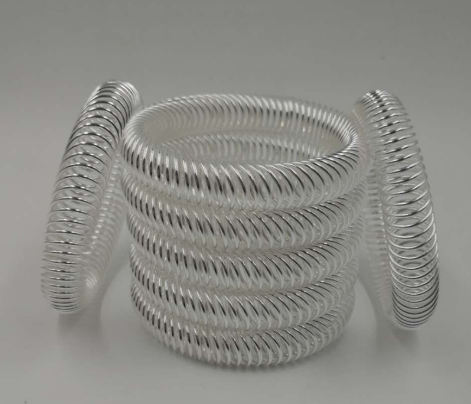
- Low closure force
- Wide working deflection range
- Nearly constant spring force
- Excellent conductivity
- 長寿命
They are commonly used in:
- Spring-energized seals
- EMIシールド
- 電気コネクタ
- バッテリー接点
- 医療機器
- Aerospace systems
Why Proper Spring Selection Matters
Selecting the correct canted coil spring directly affects:
| Performance Factor | Impact of Incorrect Selection |
|---|---|
| Sealing Reliability | Leakage or pressure loss |
| 電気伝導率 | High contact resistance |
| EMIシールド | Signal interference |
| Mechanical Life | Early fatigue failure |
| Assembly Performance | Excessive insertion force |
| Product Cost | Increased maintenance and redesign |
Even small design errors can create major reliability problems in critical applications.
1. Ignoring Load-Deflection Characteristics
One of the most common mistakes is selecting a spring based only on size instead of load-deflection behavior.
Canted coil springs are specifically designed to deliver controlled spring force across a wide deflection range. Engineers sometimes choose a spring with:
- Excessive spring force
- Insufficient working deflection
- Improper load curve
This can result in:
- Excessive wear
- Difficult assembly
- Seal damage
- Electrical instability
How to Avoid It
Always evaluate:
- Working deflection range
- Initial insertion force
- Operating load
- Final compression force
Request load-deflection data from the manufacturer before finalizing the design.
2. Choosing the Wrong Spring Material
Material selection is critical for long-term performance.
Different environments require different alloys. A spring material that performs well in standard industrial conditions may fail in:
- Cryogenic temperatures
- High heat
- Corrosive chemicals
- Vacuum environments
- Marine applications
Common Materials and Applications
| 素材 | 代表的なアプリケーション |
|---|---|
| Stainless Steel 302/316 | General industrial use |
| エルジロイ | Corrosive and medical environments |
| MP35N® | Aerospace and high-performance systems |
| インコネル | High-temperature applications |
| ベリリウム銅 | High conductivity requirements |
Common Mistake
Selecting stainless steel for highly corrosive environments often leads to corrosion fatigue and reduced spring life.
3. Overlooking Electrical Requirements
Many engineers focus only on mechanical force while ignoring electrical performance.
In electrical contact applications, poor spring selection can cause:
- High contact resistance
- 信号の不安定性
- Heat generation
- Power loss
Important Electrical Factors
- 導電率
- コンタクトフォース
- Surface plating
- Current carrying capacity
- Environmental oxidation resistance
Gold, silver, nickel, or tin plating may be necessary depending on the application.
4. Incorrect Groove Design
Even a properly selected spring can fail if the groove dimensions are incorrect.
Common groove-related problems include:
- Excessive compression
- Insufficient spring retention
- 不均等な力配分
- Spring deformation
Typical Groove Design Mistakes
| Mistake | 結果 |
|---|---|
| 溝が浅すぎる | 過圧縮 |
| 溝が深すぎる | Low contact force |
| Sharp groove edges | Spring damage |
| 耐性コントロール不良 | Inconsistent performance |
Manufacturers often provide recommended groove dimensions that should be carefully followed.
5. Ignoring Environmental Conditions
Environmental conditions significantly influence spring performance.
Critical Environmental Factors
- 温度範囲
- Humidity
- 化学物質への暴露
- Vacuum conditions
- Pressure cycling
- Salt spray exposure
For example:
- Low temperatures may reduce elasticity
- High temperatures may cause stress relaxation
- Vacuum environments require low outgassing materials
Ignoring these factors can shorten spring life dramatically.
6. Selecting Force Levels That Are Too High
Many engineers assume that higher spring force always improves reliability.
In reality, excessive force can create:
- 摩耗の促進
- Higher friction
- Seal damage
- Increased insertion force
- Shorter product lifespan
Canted coil springs are valuable because they provide optimized force with minimal wear.
The ideal design uses the lowest force necessary to achieve reliable contact or sealing.
7. Failing to Consider Dynamic vs. Static Applications
Static sealing and dynamic sealing require different spring characteristics.
Static Applications
Typically require:
- Stable long-term load
- 耐食性
- Minimal relaxation
Dynamic Applications
Require:
- Low friction
- Fatigue resistance
- Consistent cycling performance
- Reduced wear
Using a spring optimized for static conditions in dynamic systems often causes premature failure.
8. Neglecting EMI Shielding Performance
In EMI shielding applications, spring geometry and conductivity are both essential.
Common mistakes include:
- Inadequate contact density
- Incorrect plating
- Poor enclosure fit
- Insufficient compression
This can lead to electromagnetic leakage and system interference.
Industries such as aerospace, telecommunications, and defense require highly reliable EMI shielding performance.
9. Not Testing Real-World Conditions
Laboratory performance does not always reflect actual operating conditions.
Some engineers skip prototype testing to reduce development time, but this increases the risk of:
- Unexpected fatigue failure
- Chemical incompatibility
- Thermal expansion issues
- Assembly problems
Recommended Validation Tests
| テスト・タイプ | Purpose |
|---|---|
| Compression cycling | Fatigue life evaluation |
| Salt spray testing | 耐食性 |
| サーマルサイクリング | Temperature durability |
| Contact resistance testing | Electrical performance |
| Vacuum testing | Outgassing verification |
10. Focusing Only on Initial Cost
Low-cost springs may appear attractive initially, but poor-quality springs often create:
- Higher maintenance costs
- Product recalls
- Downtime
- Reduced reliability
- Shorter service life
High-quality canted coil springs provide better consistency, tighter tolerances, and improved long-term performance.
For critical industries, reliability is usually more valuable than small upfront savings.
Best Practices for Selecting Canted Coil Springs
Recommended Selection Process
- Define operating environment
- Determine required spring force
- Evaluate deflection range
- Select suitable material
- Confirm electrical requirements
- Optimize groove dimensions
- Prototype and test
- Validate long-term performance
How HANDA Supports Engineering Projects
As a professional canted coil spring manufacturer, HANDA provides:
- Custom spring design support
- 材料選択ガイダンス
- Groove design recommendations
- Prototype manufacturing
- High-precision production
- Electrical and sealing optimization
- OEM and custom engineering solutions
HANDA canted coil springs are widely used in:
- 航空宇宙
- 医療機器
- Semiconductor systems
- Oil & gas equipment
- EMIシールド用途
- High-performance electrical connectors
結論
Selecting the correct コイルスプリング requires more than choosing a standard size. Engineers must carefully evaluate load characteristics, material compatibility, environmental conditions, groove design, electrical performance, and long-term reliability.
Avoiding these common selection mistakes can significantly improve:
- Product lifespan
- Sealing reliability
- Electrical performance
- EMI shielding effectiveness
- Overall system stability
By partnering with an experienced manufacturer and performing proper validation testing, engineers can achieve optimal performance even in the most demanding applications.