Canted Coil Spring vs Compression Spring: Key Differences Explained

中国湖南省郴州市

Canted coil spring vs compression spring – Understand key differences in design, performance, applications, advantages, disadvantages, and material choices. This comprehensive guide helps engineers and buyers choose the right spring type for industrial and precision applications.

Springs are fundamental components in countless machines — from automotive systems and aerospace hardware to consumer electronics and medical devices. Among the most commonly used are コイルスプリング そして compression springs. Although both store mechanical energy and support loads, they differ significantly in how they perform and where they’re best applied.

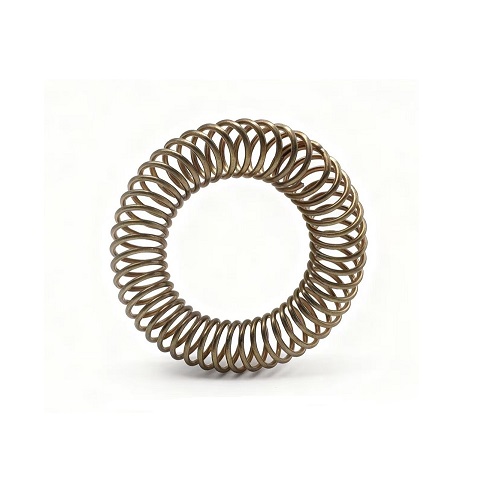
canted coil spring for mechanical connection

In this comprehensive guide, we’ll dive into:

  • What canted coil and compression springs are
  • How they differ in structure and function
  • Performance characteristics
  • Typical applications
  • Selection tips
  • Sample product descriptions

Whether you’re an engineer, buyer, designer, or DIY enthusiast, this article will help you choose the right spring solution.


🛠️ What Is a Canted Coil Spring?

A コイルスプリング — also called elastic wedge spring — consists of a series of coils bent at a slight angle (canted) relative to the spring axis. This angle gives the spring unique radial or axial preload characteristics, making it ideal for applications requiring high cyclic performance, consistent force, and low profile designs.

コイルスプリング

主な特徴

  • Rings are slightly angled rather than perfectly circular
  • Produces consistent force with minimal distortion
  • Excellent for applications needing precise preloads
  • Often used as a retaining ring alternative

🛠️ What Is a Compression Spring?

A compression spring is the most traditional spring type. It resists compression and pushes back against applied force, storing energy as it compresses. These springs are widely used due to simplicity and versatility.

主な特徴

  • Helical shape
  • Works under axial load (compressive)
  • Forces increase proportionally with compression
  • Common in valves, shock absorbers, and mechanical assemblies

📊 Canted Coil Spring vs Compression Spring – Comparison Table

Feature / ParameterCanted Coil SpringCompression Spring
Load TypeRadial / axial preloadAxial compression
Force ProfileStable, near-linear preload forceUsually linear (can be variable)
DeflectionSmaller deflectionLarger deflection range
インストールRequires precise fitOften easier to install
デザインの複雑さMore complex manufacturingSimple manufacturing
代表的なアプリケーションRetention, connectors, electrical contactsShock absorption, spacing, return force
Best ForPrecision preloadsHigh-load general use
コストHigherより低い
Manufacturing MaterialsHigh-grade stainless, specialty alloysSteel, stainless, phosphor bronze

🔍 Detailed Comparison

1. Load & Force Characteristics

  • Compression Springs: Designed to resist compressive force. The force increases with compression — ideal for shock absorption and restoring force.
  • Canted Coil Springs: Generate a preload or outward force even before compression. This makes them especially suitable as retention mechanisms in assemblies.

➡️ In simple terms: compression springs push back when squeezed; canted coil springs already exert force from the start.


2. Deflection & Range

  • Compression Springs: Can be designed for wide deflection ranges, supporting low to heavy compressive loads.
  • Canted Coil Springs: Typically provide more controlled small deflection with stable force — excellent where precision is paramount.

3. Durability & Life Cycle

  • Compression Springs: Good wear life if operated within design limits.
  • Canted Coil Springs: Exceptional performance in high-cycle applications due to minimal stress redistribution during use.

4. Installation & Fit

  • Compression Springs: Often looser fit, easy to replace.
  • Canted Coil Springs: Require precise seating — commonly serve as integral retention rings in machinery.

📌 Typical Applications

🔹 Compression Springs

  • Automotive suspension
  • Valve seals
  • Push buttons and switches
  • Shock absorbers
  • Industrial machinery return springs

🔸 Canted Coil Springs

  • Electrical connectors
  • Battery contacts
  • Aerospace and defense equipment
  • Precision micro assemblies
  • Sealing and retention rings

📈 Spring Load vs Deflection Chart (Example)

DEFLECTION (mm) →       0    0.5    1.0    1.5     2.0
COMPRESSION SPRING
FORCE (N)             | 0   50     100    150     200

CANTED COIL SPRING
FORCE (N)             |10   60     110    150     185

➡️ In the above simplified example:

  • The canted coil spring starts with a preload (non-zero force at zero deflection)
  • The compression spring starts at zero force and increases linearly

⚙️ Material Selection

Choosing the correct material affects performance, longevity, and corrosion resistance.

Common Materials

Material Type強さ耐食性Typical Use Cases
Carbon Steelミディアム低いGeneral use
Stainless Steel (304/316)高い非常に高いCorrosive environments
Music Wire非常に高い低いHigh-cycle, dry
リン青銅ミディアムミディアムElectrical contacts

🛠️ Product Descriptions (SEO Optimized)

1. Premium Canted Coil Spring – Model CCSP-500

  • 素材: 316ステンレス鋼
  • Outer Diameter: 10 mm
  • Preload Force: 5 N
  • Cycles: >1,000,000 with minimal fatigue
  • ユースケース High-precision connectors and battery contact retention

Ideal for applications where consistent preload force and corrosion resistance are required.


2. Heavy-Duty Compression Spring – Model CSPR-1200

  • 素材: High-carbon steel
  • Free Length: 40 mm
  • Spring Rate: 48 N/mm
  • Max Deflection: 10 mm
  • ユースケース Automotive shock dampers, industrial presses

Built to withstand high compressive loads with excellent durability and cost efficiency.


📌 How to Choose Between Them

Choose a canted coil spring if:
✔ You need preload or radial force
✔ The design requires space-saving and stable force
✔ High-cycle performance is crucial
✔ You want precise contact force for connectors

Choose a compression spring if:
✔ You need broad deflection range
✔ Cost-effectiveness is prioritized
✔ General-purpose load resistance is required


📍 SEO Tips for Your Website

If you plan to publish this article:

  • Use long-tail keywords:
    • canted coil springs performance comparison
    • compression vs canted coil spring application
    • how to select spring type for industrial design
  • Add internal links to relevant products
  • Include a FAQ section targeting “what is”, “how to”, “difference between”
  • Use alt text for any images: e.g., diagram comparing compression spring vs canted coil spring force profile

📌 Summary

特徴Canted Coil SpringCompression Spring
Preload ForceはいNo
Deflection RangeSmaller, controlledLarger
Installation FitRequires precisionEasy
Typical IndustriesAerospace, connectorsAutomotive, machinery
Lifecycle Performance素晴らしいグッド

By clearly understanding the structural and functional differences, you can make smarter decisions when designing or selecting spring components for your products.

CONTACT US