Kantige Schraubenfeder vs. Druckfeder: Erklärung der Hauptunterschiede
Kantige Schraubenfeder vs. Druckfeder - Verstehen Sie die wichtigsten Unterschiede in Bezug auf Konstruktion, Leistung, Anwendungen, Vorteile, Nachteile und Materialauswahl. Dieser umfassende Leitfaden hilft Ingenieuren und Einkäufern bei der Auswahl des richtigen Federtyps für Industrie- und Präzisionsanwendungen.
Federn sind grundlegende Komponenten in zahllosen Maschinen - von Automobilsystemen und Luft- und Raumfahrttechnik bis hin zu Unterhaltungselektronik und medizinischen Geräten. Zu den am häufigsten verwendeten gehören schräge Schraubenfedern und Druckfedern. Obwohl beide mechanische Energie speichern und Lasten tragen, unterscheiden sie sich erheblich in der Art und Weise, wie sie funktionieren und wo sie am besten eingesetzt werden.
In diesem umfassenden Leitfaden gehen wir darauf ein:
- Was sind geneigte Schrauben- und Druckfedern?
- Wie sie sich in Struktur und Funktion unterscheiden
- Leistungsmerkmale
- Typische Anwendungen
- Tipps zur Auswahl
- Beispielhafte Produktbeschreibungen
Ob Sie nun Ingenieur, Einkäufer, Designer oder Heimwerker sind, dieser Artikel hilft Ihnen bei der Auswahl der richtigen Federlösung.
🛠️ Was ist eine gebogene Spiralfeder?
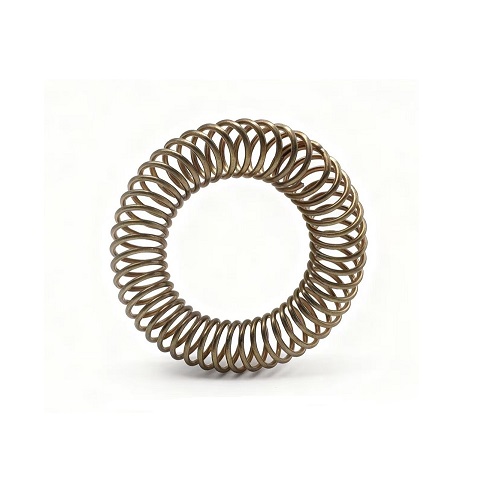
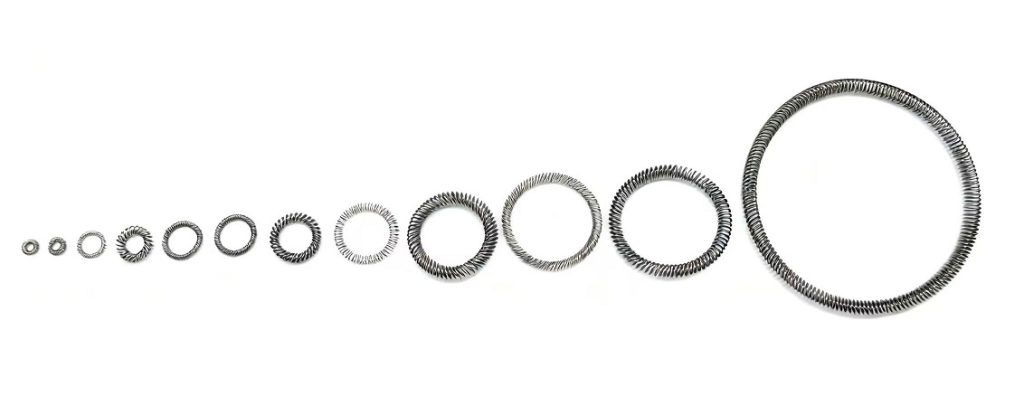
A Schrägzugfeder - auch genannt elastische Keilfeder - besteht aus einer Reihe von Windungen, die in einem leichten Winkel (gekippt) zur Federachse gebogen sind. Dieser Winkel verleiht der Feder eine einzigartige radiale oder axiale Vorspannungskennlinienund ist damit ideal für Anwendungen, die hohe zyklische Leistung, konstante Kraft und niedrige Bauweise.
Wesentliche Merkmale
- Die Ringe sind nicht perfekt rund, sondern leicht abgewinkelt
- Erzeugt gleichmäßige Kraft mit minimaler Verzerrung
- Hervorragend geeignet für Anwendungen, die präzise Vorspannungen erfordern
- Häufig verwendet als Sicherungsring alternativ
🛠️ Was ist eine Druckfeder?
A Druckfeder ist der traditionellste Federtyp. Sie widersteht der Kompression und stößt gegen die aufgebrachte Kraft zurück, wobei sie beim Zusammendrücken Energie speichert. Diese Federn sind aufgrund ihrer Einfachheit und Vielseitigkeit weit verbreitet.
Wesentliche Merkmale
- Spiralförmig
- Arbeitet unter axialer Belastung (Druck)
- Die Kräfte nehmen mit der Kompression proportional zu
- Häufig in Ventilen, Stoßdämpfern und mechanischen Baugruppen
📊 Canted Coil Spring vs. Compression Spring - Vergleichstabelle
| Merkmal/Parameter | Kantige Spiralfeder | Druckfeder |
|---|---|---|
| Lasttyp | Radiale / axiale Vorspannung | Axiale Kompression |
| Kraftprofil | Stabile, nahezu lineare Vorspannkraft | Normalerweise linear (kann variabel sein) |
| Ablenkung | Geringere Ablenkung | Größerer Ablenkungsbereich |
| Einrichtung | Erfordert präzise Passform | Oft einfacher zu installieren |
| Entwurfskomplexität | Komplexere Fertigung | Einfache Herstellung |
| Typische Anwendungen | Halterung, Steckverbinder, elektrische Kontakte | Stoßdämpfung, Abstände, Rückstellkraft |
| Am besten für | Präzisionsvorspannungen | Hohe Belastung bei allgemeiner Verwendung |
| Kosten | Höher | Unter |
| Herstellung von Materialien | Hochwertiger Edelstahl, Speziallegierungen | Stahl, Edelstahl, Phosphorbronze |
🔍 Detaillierter Vergleich
1. Merkmale von Last und Kraft
- Druckfedern: Entwickelt, um Druckkräften zu widerstehen. Die Kraft nimmt mit der Kompression zu - ideal für Stoßdämpfung und Rückstellkraft.
- Kantige Spiralfedern: Erzeugen einer Vorspannung oder nach außen gerichtete Kraft noch vor der Kompression. Dies macht sie besonders geeignet als Retentionsmechanismen in Versammlungen.
➡️ In einfachen WortenDruckfedern: Druckfedern drücken beim Zusammendrücken zurück; gekantete Schraubenfedern üben bereits von Anfang an Kraft aus.
2. Ablenkung & Reichweite
- Druckfedern: Sie können für große Durchbiegungsbereiche ausgelegt werden und tragen geringe bis schwere Druckbelastungen.
- Kantige Spiralfedern: Sie bieten in der Regel eine kontrolliertere kleine Auslenkung mit stabiler Kraft - hervorragend, wenn Präzision von größter Bedeutung ist.
3. Langlebigkeit & Lebenszyklus
- Druckfedern: Gute Verschleißfestigkeit bei Betrieb innerhalb der Auslegungsgrenzen.
- Kantige Spiralfedern: Außergewöhnliche Leistung in Hochzyklus-Anwendungen aufgrund der minimalen Spannungsverteilung während des Gebrauchs.
4. Einbau & Montage
- Druckfedern: Oft lockerer Sitz, leicht zu ersetzen.
- Kantige Spiralfedern: Erfordern einen präzisen Sitz - dienen in der Regel als integrierte Sicherungsringe in Maschinen.
📌 Typische Anwendungen
🔹 Druckfedern
- Fahrzeugaufhängung
- Ventildichtungen
- Drucktasten und Schalter
- Stoßdämpfer
- Rückstellfedern für Industriemaschinen
🔸 Kantige Spiralfedern
- Elektrische Anschlüsse
- Batteriekontakte
- Luft- und Raumfahrt- und Verteidigungsausrüstung
- Präzisions-Mikrobaugruppen
- Dichtungs- und Sicherungsringe
📈 Diagramm Federbelastung vs. Durchbiegung (Beispiel)
ABFLUG (mm) → 0 0,5 1,0 1,5 2,0
DRUCKFEDER
KRAFT (N) | 0 50 100 150 200

SCHRÄGE SCHRAUBENFEDER
KRAFT (N) |10 60 110 150 185
➡️ In dem obigen vereinfachten Beispiel:
- Die schräge Schraubenfeder beginnt mit einer Vorspannung (Kraft ungleich Null bei Durchbiegung Null)
- Die Druckfeder beginnt bei Nullkraft und steigt linear an
⚙️ Materialauswahl
Die Wahl des richtigen Materials wirkt sich auf Leistung, Langlebigkeit und Korrosionsbeständigkeit aus.
Allgemeine Materialien
| Material Typ | Stärke | Korrosionsbeständigkeit | Typische Anwendungsfälle |
|---|---|---|---|
| Kohlenstoffstahl | Mittel | Niedrig | Allgemeiner Gebrauch |
| Rostfreier Stahl (304/316) | Hoch | Sehr hoch | Korrosive Umgebungen |
| Musik Draht | Sehr hoch | Niedrig | Hochzyklisch, trocken |
| Phosphor-Bronze | Mittel | Mittel | Elektrische Kontakte |
🛠️ Produktbeschreibungen (SEO-optimiert)
1. Premium-Schraubenfeder mit schrägem Verlauf - Modell CCSP-500
- Material: Edelstahl 316
- Äußerer Durchmesser: 10 mm
- Vorspannkraft: 5 N
- Zyklen: >1.000.000 bei minimaler Ermüdung
- Anwendungsfall: Hochpräzise Steckverbinder und Batteriekontaktsicherung
Ideal für Anwendungen, bei denen eine konstante Vorspannkraft und Korrosionsbeständigkeit erforderlich sind.
2. Hochbelastbare Druckfeder - Modell CSPR-1200
- Material: Hochkohlenstoffhaltiger Stahl
- Freie Länge: 40 mm
- Federrate: 48 N/mm
- Maximale Durchbiegung: 10 mm
- Anwendungsfall: Stoßdämpfer für Kraftfahrzeuge, Industriepressen
Gebaut, um hohen Druckbelastungen bei hervorragender Haltbarkeit und Kosteneffizienz standzuhalten.
📌 Wie man zwischen ihnen wählen kann
Wählen Sie eine schräge Schraubenfeder, wenn:
✔ Sie brauchen Vorspannung oder Radialkraft
✔ Die Konstruktion erfordert eine platzsparende und stabile Kraft
✔ Hohe Zyklusleistung ist entscheidend
✔ Sie wollen eine präzise Kontaktkraft für Steckverbinder
Wählen Sie eine Druckfeder, wenn:
✔ Sie brauchen einen großen Ablenkungsbereich
✔ Kosteneffektivität wird priorisiert
✔ Allgemeiner Lastwiderstand ist erforderlich
📍 SEO-Tipps für Ihre Website
Wenn Sie diesen Artikel veröffentlichen möchten:
- Verwenden Sie Long-Tail-Schlüsselwörter:
- Vergleich der Leistung von geneigten Schraubenfedern
- Anwendung von Druckfedern im Vergleich zu kantigen Schraubenfedern
- Wie wählt man den Federtyp für Industriedesign aus?
- hinzufügen interne Links zu relevanten Produkten
- Enthalten Sie eine FAQ-Bereich Ausrichtung auf "Was ist", "Wie", "Unterschied zwischen"
- Verwenden Sie Alt-Text für beliebige Bilder: z.B., Diagramm zum Vergleich des Kraftprofils einer Druckfeder mit dem einer schrägen Schraubenfeder
📌 Zusammenfassung
| Merkmal | Kantige Spiralfeder | Druckfeder |
|---|---|---|
| Vorspannung Kraft | Ja | Nein |
| Ablenkungsbereich | Kleinere, kontrollierte | Größere |
| Einbau Passform | Erfordert Präzision | Einfach |
| Typische Branchen | Luft- und Raumfahrt, Steckverbinder | Automobilindustrie, Maschinen |
| Lebenszyklus-Leistung | Ausgezeichnet | Gut |
Durch ein klares Verständnis der strukturelle und funktionelle Unterschiedekönnen Sie bei der Entwicklung oder Auswahl von Federkomponenten für Ihre Produkte intelligentere Entscheidungen treffen.