Wie Sie die richtige Schraubenfeder auswählen: Kompression, Spannung und Torsion erklärt
Erfahren Sie, wie Sie die richtige Schraubenfeder für Ihre Anwendung auswählen. Vergleichen Sie Druck-, Zug- und Torsionsfedern, verstehen Sie wichtige Konstruktionsparameter wie Drahtdurchmesser, Federrate und Materialauswahl und vermeiden Sie häufige Fehler.
Einführung: Warum die Frühjahrsauswahl wichtig ist
Schraubenfedern sind allgegenwärtig - von Kugelschreibern und Garagentoren bis hin zu Fahrzeugaufhängungen und Handhabungsgeräten für Halbleiter. Doch die Wahl des falschen Federtyps oder der falschen Größe kann zu vorzeitigem Versagen, unbeständiger Leistung und kostspieligen Neukonstruktionen führen.
Dieser Leitfaden erläutert die drei Haupttypen von Schraubenfedern - Druck-, Zug- (Verlängerungs-) und Torsionsfedern - und bietet einen praktischen Rahmen für die Auswahl der richtigen Feder für Ihre mechanische Anwendung.
Was ist eine Spiralfeder?
Eine Spiralfeder ist eine mechanische Vorrichtung, die aus spiralförmig gewickeltem Draht besteht. Wenn eine Kraft aufgebracht wird, speichert die Feder mechanische Energie, indem sie sich elastisch verformt; wenn die Kraft aufgehoben wird, kehrt sie in ihre ursprüngliche Form zurück.
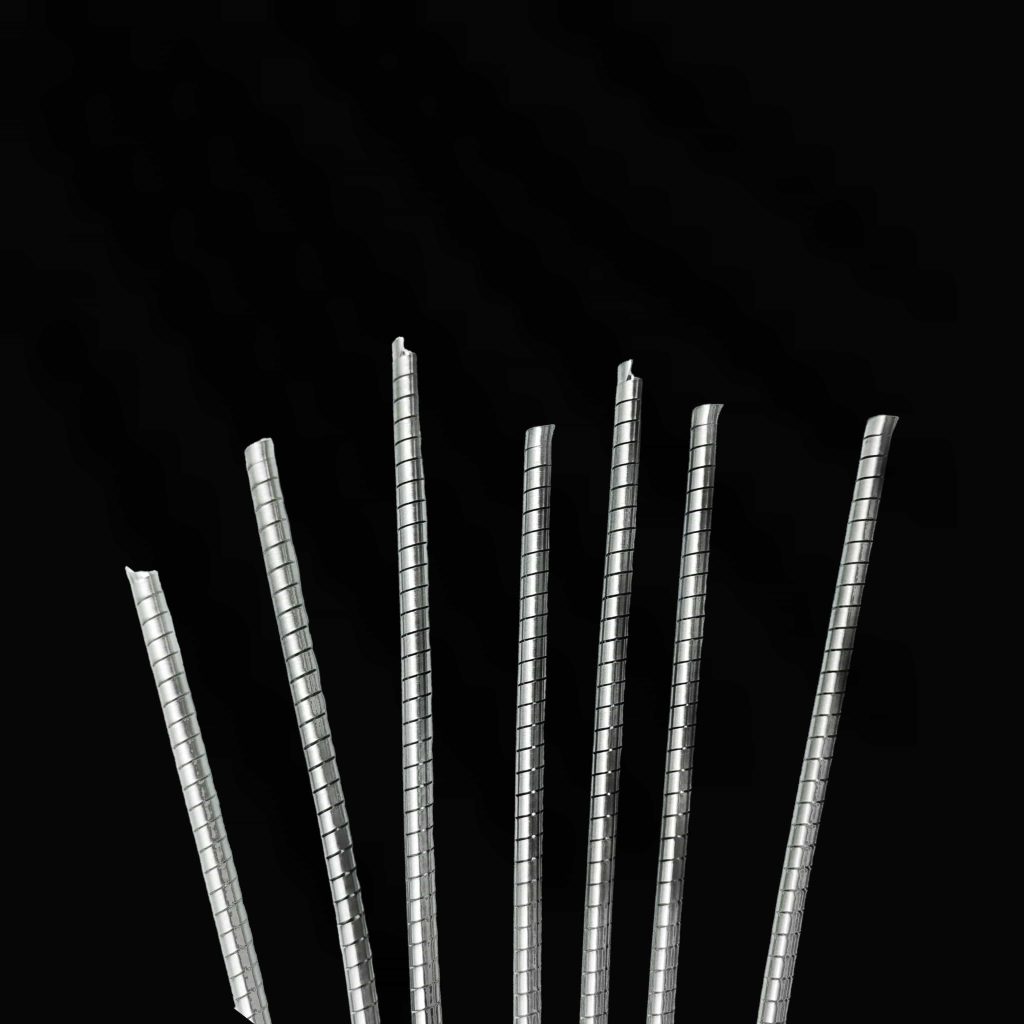
Schraubenfedern werden klassifiziert nach dem Richtung der Primärlast sie widerstehen:
| Feder Typ | Richtung der Primärlast | Typische Anwendungen |
|---|---|---|
| Druckfeder | Axiale Druckkraft | Ventile, Stoßdämpfer, Druckknöpfe |
| Zugfeder (Verlängerung) | Axiale Zugkraft | Garagentore, Trampoline, Ausgleichsmechanismen |
| Torsionsfeder | Rotationskraft (Drehmoment) | Wäscheklammern, Scharniermechanismen, Mausefallen |
Der erste Schritt besteht darin, herauszufinden, welcher Typ für Ihre Anwendung geeignet ist.
1. Druckfedern - Druckkraft
Druckfedern sind so konstruiert, dass sie axiale Druckbelastungen. Wenn man auf eine Druckfeder drückt, verkürzt sie sich und speichert Energie. Sie sind die häufigste Art von Schraubenfedern.
Wesentliche Merkmale
- Abstand zwischen den Drähten: Die Spulen haben in der Regel einen Abstand zueinander (offene Teilung), um eine Kompression zu ermöglichen.
- Typen beenden: Geschlossene (quadratische), geschliffene oder offene Enden beeinflussen, wie die Feder in ihrem Gehäuse sitzt.
- Verhalten erzwingen: Die Kraft nimmt linear mit der Durchbiegung zu (Hooke'sches Gesetz), es sei denn, die Konstruktion hat eine variable Steigung.
Wann sollte eine Druckfeder gewählt werden?
- Sie müssen ein Bauteil in seine ursprüngliche Position zurückschieben (z. B. den Ventilrücklauf)
- Sie wollen Stöße oder Vibrationen absorbieren (z. B. Fahrzeugaufhängung)
- Sie benötigen eine Feder, die in einer Bohrung oder über eine Stange funktioniert.
- Statische oder dynamische Belastung mit mittlerer bis hoher Lebensdauer
Konstruktionsparameter für Druckfedern
| Parameter | Symbol | Typische Reichweite/Bedeutung |
|---|---|---|
| Drahtdurchmesser | d | 0,1 mm - 20 mm; bestimmt die Stärke |
| Äußerer Durchmesser | OD | Muss in das Gehäuse passen |
| Innendurchmesser | ID | Muss die Stange freilassen, wenn sie über einer Welle verwendet wird |
| Freie Länge | L₀ | Länge im unkomprimierten Zustand |
| Solide Höhe | Lₛ | Länge im voll zusammengedrückten Zustand (Spulen berühren sich) |
| Federrate (Steifigkeit) | k | Kraft pro Einheitsdurchbiegung (N/mm oder lb/in) |
| Anzahl der aktiven Spulen | Nₐ | Beeinflusst Federrate und Spannung |
| Material | - | Musikdraht, rostfreier Stahl, Inconel, usw. |
Berechnungsbeispiel
Eine Druckfeder mit k = 10 N/mm erzeugt eine Kraft von 100 N, wenn sie um 10 mm zusammengedrückt wird.
2. Zugfedern (Verlängerungsfedern) - Zugkraft
Zugfedern sind so konstruiert, dass sie axiale Zugbelastungen. Sie haben Haken, Schlaufen oder Gewindeenden zur Befestigung an Bauteilen. Wenn man an einer Zugfeder zieht, dehnt sie sich und speichert Energie.
Wesentliche Merkmale
- Vorspannung: Viele Zugfedern sind mit innerer Vorspannung gewickelt, so dass eine bestimmte Kraft erforderlich ist, bevor eine Auslenkung erfolgt.
- Konfigurationen beenden: Maschinenhaken, überkreuzte Mittelschlaufen, verlängerte Haken oder Gewindeeinsätze.
- Versagensmodus: Eine Überdehnung kann zum dauerhaften Versagen des Hakens führen.
Wann sollte eine Zugfeder gewählt werden?
- Sie müssen zwei Komponenten zusammenziehen (z. B. Ausgleichsgewicht für ein Garagentor)
- Sie wollen die Spannung in einem Riemen- oder Kabelsystem aufrechterhalten
- Sie brauchen eine Rückholkraft, die zieht, statt zu drücken
Wichtige Konstruktionsparameter für Zugfedern
| Parameter | Bedeutung |
|---|---|
| Vorspannung | Erforderliche Kraft zur Einleitung der Auslenkung; muss angegeben werden |
| Maximale Ausdehnung | Die freie Länge sollte 50% nicht überschreiten, um eine Überbeanspruchung zu vermeiden. |
| Stärke des Hakens | Haken sind oft der schwächste Punkt; für Ermüdung konstruieren |
| Federrate | Normalerweise niedriger als Druckfedern ähnlicher Größe |
Häufiger Fallstrick
Konstruieren Sie eine Zugfeder niemals so, dass sie nahe ihrer Elastizitätsgrenze arbeitet. Haken versagen oft zuerst aufgrund von Spannungskonzentration.
3. Torsionsfedern - Rotationskraft
Torsionsfedern sind so konstruiert, dass sie Rotationslasten (Drehmoment). Die Federschenkel werden um die Mittelachse verdreht, und der Federkörper wickelt sich fester auf (oder ab), um ein Drehmoment zu erzeugen.
Wesentliche Merkmale
- Ausrichtung der Beine: Die Beine können gerade, gebogen oder individuell geformt sein.
- Windrichtung: Rechts- oder Linksdrehung bestimmt die Drehmomentrichtung.
- Durchmesser des Körpers: Verändert sich leicht unter Last (kann Spiel erfordern).
Wann sollte man eine Torsionsfeder wählen?
- Sie benötigen eine Rückstellkraft für die Drehung (z. B. Scharnier, Wäscheklammer)
- Sie möchten den Druck auf einen Drehpunkt (z. B. Bürstenhalter in einem Motor) aufrechterhalten.
- Der Platz ist in linearer Richtung begrenzt, aber in Rotationsrichtung verfügbar
Wichtige Konstruktionsparameter für Torsionsfedern
| Parameter | Beschreibung |
|---|---|
| Drehmoment | Erzeugtes Moment pro Grad der Durchbiegung (Nm/deg oder lb-in/deg) |
| Durchmesser des Dorns | Stange oder Welle, die durch den Federkörper verläuft; muss eine Ausdehnung des Körpers zulassen |
| Länge der Beine | Freie und belastete Schenkellängen |
| Spannungskonzentration | Biegungen an den Schenkeln erzeugen hohe Spannungen; verwenden Sie nach Möglichkeit große Radien |
Beispiel
Eine Torsionsfeder mit einer Drehmomentrate von 0,5 N-m/Grad erzeugt bei einer Auslenkung von 30° 15 N-m.
Die Wahl des richtigen Federtyps: Flussdiagramm zur Entscheidung
Materialauswahl für Spiralfedern
Der Werkstoff bestimmt die maximale Belastung der Feder, den Temperaturbereich, die Korrosionsbeständigkeit und die Kosten.
| Material | Maximale Temperatur | Korrosionsbeständigkeit | Typische Anwendungen |
|---|---|---|---|
| Musikdraht (ASTM A228) | 120°C | Schlecht (nicht beschichtet) | Hohe Belastung, geringe Kosten (z. B. Spielzeug, Instrumente) |
| Ölgehärteter Draht | 150°C | Messe | Fahrzeugaufhängungen, Kupplungen |
| Rostfreier Stahl 302/304 | 260°C | Gut | Lebensmittel, Medizin, Outdoor |
| Rostfreier Stahl 316 | 260°C | Ausgezeichnet (Marine) | Chemie, Marine, Offshore |
| 17-7PH rostfrei | 315°C | Sehr gut | Luft- und Raumfahrt, hohe Beanspruchung |
| Inconel X-750 | 540°C | Ausgezeichnet (Oxidation) | Hochtemperatur-Gasturbinen |
| Elgiloy | 400°C | Ausgezeichnet (Sauergas) | Medizin, Öl und Gas |
| Beryllium-Kupfer | 200°C | Gut (nicht-magnetisch) | EMI-Abschirmung, elektrische Kontakte |
Wichtige Federparameter: Wie sie zusammenhängen
Federrate (k)
Die Federrate gibt an, wie steif die Feder ist.
Formel für Druck-/Zugfedern:
k = (G × d⁴) / (8 × D³ × Nₐ)
Wo:
- G = Schermodul des Materials (abhängig von der Legierung)
- d = Drahtdurchmesser
- D = mittlerer Spulendurchmesser (OD - d)
- Nₐ = Anzahl der aktiven Spulen
Auswirkung: Kleine Änderungen des Drahtdurchmessers (d) haben eine große Wirkung, da d die vierte Potenz ist.
Maximal zulässige Spannung
Um eine dauerhafte Verformung zu vermeiden, darf die maximale Betriebsspannung die Torsionsstreckgrenze des Werkstoffs nicht überschreiten. Für die meisten Federwerkstoffe gilt als Faustregel, dass die Spannung bei statischen Anwendungen unter 45% der Zugfestigkeit und bei dynamischen Anwendungen (Ermüdung) unter 35% liegen sollte.
Häufige Fehler bei der Auswahl von Spiralfedern
- Unberücksichtigt bleibt die Federrate - Die Wahl einer zu steifen oder zu weichen Feder für die verfügbare Einfederung.
- Vergessen Sie die feste Höhe - Druckfedern dürfen im Normalbetrieb niemals bis zur vollen Höhe zusammengedrückt werden.
- Übergreifende Endkonfigurationen - Eine Zugfeder mit schwachen Haken wird versagen, auch wenn der Körper stark ist.
- Falsche Anpassung des Materials an die Umgebung - Musikdraht rostet im Freien schnell; verwenden Sie rostfreien Stahl.
- Vernachlässigung der Ermüdungslebensdauer - Anwendungen mit hoher Beanspruchung erfordern spannungsfreie Federn und glatte Oberflächen.
- Keine Prüfung auf Knickung - Lange, schlanke Druckfedern können bei Belastung seitlich ausknicken.
Praktische Checkliste für die Auswahl
Verwenden Sie diese Checkliste, wenn Sie eine Spiralfeder spezifizieren:
Schritt 1 - Definieren der Betriebsbedingungen
- Belastungsrichtung (Drücken, Ziehen oder Drehen)
- Maximale und minimale Belastung
- Verfügbarer Ablenkungs- oder Drehwinkel
- Betriebstemperaturbereich
- Umwelteinflüsse (Feuchtigkeit, Chemikalien, Salz)
- Erforderliche Lebensdauer (Anzahl der Schaltspiele)
Schritt 2 - Schätzen der Federabmessungen
- Verfügbarer Platz (OD, ID, freie Länge)
- Art der Endbefestigung (Haken, geschlossene Enden, usw.)
Schritt 3 - Material auswählen
- Abhängig von Temperatur, Korrosion und Kosten
Schritt 4 - Berechnen der Federrate
- Erforderliches k = Last / Durchbiegung
Schritt 5 - Auswählen oder Gestalten
- Verwenden Sie Herstellerkataloge für Standardfedern
- Fordern Sie kundenspezifische Federn an, wenn die Abmessungen oder Belastungen nicht dem Standard entsprechen.
Schritt 6 - Validieren
- Testen von Prototyp-Federn unter realen Bedingungen
- Prüfung auf Spannung, Knickung und bleibende Verformung
Beispiel aus der Praxis: Halbleiter-Handling-Ausrüstung
Anmeldung: Eine Feder wird benötigt, um einen Waffelträger nach einem Sortiervorgang zurückzuschieben. Verfügbarer Platz: OD ≤ 12 mm, freie Länge = 30 mm, zusammengedrückte Länge bei Belastung = 20 mm. Erforderliche Kraft bei komprimierter Länge = 15 N. Umgebungstemperatur 50°C, Reinraumumgebung (keine korrosiven Gase).
Auswahlverfahren:
- Typ: Druckfeder (Druck)
- Ablenkung: 30 mm - 20 mm = 10 mm
- Erforderliche Federrate: 15 N / 10 mm = 1,5 N/mm
- Material: Edelstahl 304 (Reinraum, moderate Temperaturen)
- Drahtdurchmesser: Schätzung anhand der Formel oder des Katalogs; versuchen Sie d = 0,8 mm, D = 10 mm, Nₐ = 8 → berechnen Sie k
- Ergebnis: Eine Standard-Druckfeder aus rostfreiem Stahl 304 mit einem Außendurchmesser von 10 mm, einem Draht von 0,8 mm, einer freien Länge von 30 mm und 8 aktiven Windungen liefert k ≈ 1,5 N/mm.
Wo Sie Standard-Spiralfedern finden
Die meisten Federhersteller bieten Online-Kataloge mit Suchfiltern an:
- Federart (Druck, Zug, Torsion)
- Außendurchmesser, freie Länge, Drahtdurchmesser
- Federrate und maximale Belastung
- Material
Für kundenspezifische Federn bitte eine Zeichnung mitliefern:
- Federtyp, Material und Oberflächenbeschaffenheit
- OD, ID, freie Länge, Drahtdurchmesser
- Anzahl der aktiven Spulen und Endkonfiguration
- Belastung bei einer oder mehreren Auslenkungen (oder Federrate)
- Betriebsumgebung
Schlussfolgerung
Die Auswahl des richtigen Spiralfeder muss nicht schwierig sein. Beginnen Sie damit, die Belastungsrichtung zu ermitteln - Druck zum Drücken, Zug zum Ziehen, Torsion zum Drehen. Legen Sie dann Ihre Betriebsbedingungen fest, wählen Sie das richtige Material, berechnen Sie die erforderliche Federrate und prüfen Sie auf häufige Fallstricke, wie z. B. feste Höhe oder Hakenbruch.
Wenn Standardfedern nicht passen, sind maßgeschneiderte Federn eine praktische Lösung - und dank der modernen Fertigung sind maßgeschneiderte Federn auch in moderaten Mengen erschwinglich.