Kantige Spiralfeder vs. Fingerstock: EMI-Leistungsvergleich EMI-Abschirmungsprodukte
Vergleichen Sie die EMI-Abschirmleistung von geneigten Spiralfedern und Fingerstockdichtungen. Erfahren Sie mehr über Abschirmwirkung, Kontaktkraft, Haltbarkeit und Installationsunterschiede, um die richtige Lösung für Ihre Anwendung zu finden.
Einleitung: Die Herausforderung der EMI-Abschirmung in der modernen Elektronik
Da elektronische Geräte immer kleiner, schneller und vernetzter werden, ist die elektromagnetische Interferenz (EMI) zu einer entscheidenden Herausforderung für die Konstruktion geworden. Eine wirksame EMI-Abschirmung erfordert die Aufrechterhaltung eines kontinuierlichen elektrischen Kontakts über Gehäusenähte, Türspalten und Kontaktflächen hinweg. Zwei gängige Lösungen dominieren den Markt: schräge Schraubenfedern und Fingerstockdichtungen (auch bekannt als Berylliumkupfer-Fingerstreifen). Beide bieten leitfähige Pfade zur Erde, unterscheiden sich aber erheblich in Leistung, Haltbarkeit und Anwendungseignung.
Dieser Artikel bietet einen umfassenden technischen Vergleich zwischen kantigen Spiralfedern und Fingerstock für EMI-Abschirmungsanwendungen. Ingenieure und Beschaffungsspezialisten erfahren, welche Lösung eine bessere Abschirmwirkung, eine längere Lebensdauer und einen besseren Wert für ihre spezifischen Anforderungen bietet.
Was ist eine gebogene Spiralfeder?
A Schrägzugfeder ist eine präzisionsgefertigte Feder mit relativ zur Federachse abgewinkelten (gekippten) Windungen. Beim Zusammendrücken rollen die Windungen, anstatt sich einfach durchzubiegen, wodurch ein nahezu konstante Kraft über einen großen Auslenkungsbereich. Zur EMI-Abschirmung werden geneigte Spiralfedern in Nuten zwischen zusammenpassenden leitenden Oberflächen installiert, wodurch mehrere Kontaktpunkte entstehen, die einen kontinuierlichen Pfad mit niedriger Impedanz bilden.
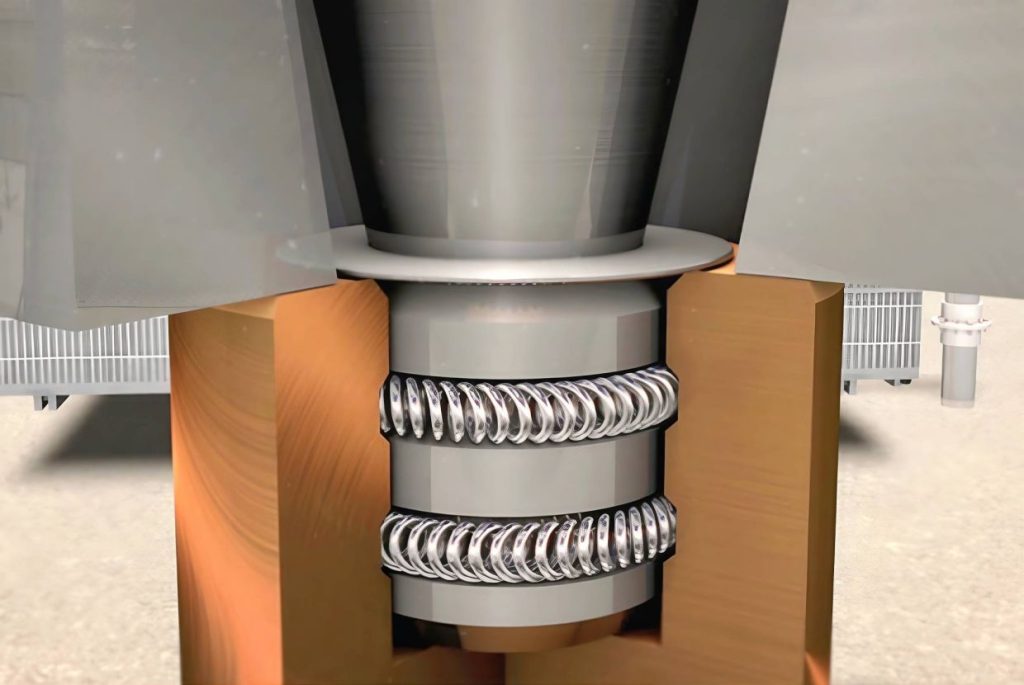
Wesentliche Merkmale:
- Nahezu konstante Kraftabgabe über den Druckbereich 20-30%
- Mehrere unabhängige Kontaktpunkte pro Spule
- Verfügbar in radialer oder axialer Kraftausrichtung
- Kann als Endloslänge oder als geschweißte Ringe geliefert werden
Was ist ein Fingerstock?
Fingerstock (auch EMI-Fingerstock oder Berylliumkupfer-Fingerstreifen genannt) besteht aus einer Reihe von geformten Metall-"Fingern", die an einem gemeinsamen Rückgrat oder Träger befestigt sind. Die Finger wirken wie einzelne freitragende Balken, die sich beim Zusammendrücken gegen eine Gegenfläche durchbiegen. Fingerstock wird seit Jahrzehnten in elektronischen Gehäusen, Schranktüren und abnehmbaren Platten verwendet.
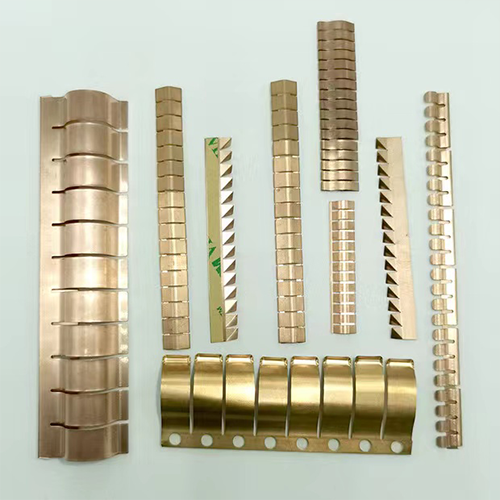
Wesentliche Merkmale:
- Lineare Kraftzunahme bei Einfederung (Federrate)
- Diskrete Kontaktpunkte an jeder Fingerspitze
- In der Regel mit Klebstoff, Klammern oder mechanischen Befestigungen montiert
- Erhältlich in verschiedenen Fingerhöhen, -stärken und -materialien
Leistungsvergleich von Kopf zu Kopf
1. Wirksamkeit der Abschirmung (SE)
Die Wirksamkeit der Abschirmung misst, wie gut eine Dichtung elektromagnetische Energie dämmt. Sie wird in der Regel in Dezibel (dB) angegeben.
| Parameter | Kantige Spiralfeder | Fingerstock |
|---|---|---|
| Typische SE bei 1 GHz | 80-165 dB (je nach Ausführung) | 60-100 dB |
| Frequenzbereich | Ausgezeichnet von 1 MHz bis 10 GHz | Gut bis zu 1 GHz, verschlechtert sich bei höheren Frequenzen |
| Kontakt Redundanz | Mehrere Kontaktpunkte pro Spule gewährleisten Kontinuität | Einzelkontakt pro Finger; bei Verlust eines Fingers entsteht eine Lücke |
| Langfristige SE-Stabilität | Ausgezeichnet (nahezu konstante Kraft kompensiert Verschleiß) | Mäßig (die Kraft nimmt ab, wenn die Finger einen Satz machen) |
Fazit: Gekantete Spiralfedern bieten eine hervorragende Abschirmwirkung, insbesondere bei höheren Frequenzen und über eine längere Lebensdauer.
2. Kontaktkraft und Durchbiegungsverhalten
Eine angemessene Kontaktkraft ist für die Aufrechterhaltung eines niedrigen Übergangswiderstands und einer wirksamen EMI-Abdichtung unerlässlich.
| Parameter | Kantige Spiralfeder | Fingerstock |
|---|---|---|
| Kraft-Weg-Kurve | Nahezu konstant (flache Kurve) | Linear (Kraft nimmt mit der Auslenkung zu) |
| Konsistenz erzwingen | Gleichmäßig über den gesamten Kompressionsbereich | Die Kraft variiert mit der Höhe der Kompression |
| Empfohlene Kompression | 20-30% in freier Höhe | 25-50% der Fingerhöhe |
| Risiko der Überkomprimierung | Sehr niedrig (die Feder kann ohne Beschädigung vollständig zusammengedrückt werden) | Hoch (Finger können Dauerbelastung aushalten) |
Fazit: Gekantete Spiralfedern sorgen für eine gleichbleibende Kraft, selbst bei Schwankungen der Nuttiefe, Oberflächenunregelmäßigkeiten oder Wärmeausdehnung. Der Fingerstock kann die Kontaktkraft verlieren, wenn er nicht präzise zusammengedrückt wird.
3. Langlebigkeit und Zyklusdauer
Anwendungen mit wiederholtem Öffnen/Schließen (Türen, abnehmbare Platten, Steckverbinder) erfordern eine hohe Lebensdauer.
| Parameter | Kantige Spiralfeder | Fingerstock |
|---|---|---|
| Typische Lebensdauer | 10.000 - 100.000+ Zyklen | 5.000 - 20.000 Zyklen |
| Versagensmodus | Allmählicher Kraftabbau (vorhersehbar) | Fingerknacken oder dauerhafte Verfestigung |
| Widerstand gegen Druckverformung | Ausgezeichnet (Werkstoffe wie Elgiloy, Inconel) | Mäßig (Berylliumkupfer kann abbinden) |
| Wartung | Minimal; selbstkompensierend | Muss möglicherweise regelmäßig ersetzt werden |
Fazit: Gekantete Spiralfedern überdauern bei Anwendungen mit hoher Beanspruchung, wie z. B. Schranktüren, abnehmbare Abdeckungen und Steckerschnittstellen, deutlich länger als Fingerfedern.
4. Einbau und Montage
Die Einfachheit der Installation wirkt sich auf die Arbeitskosten und die Zuverlässigkeit der Montage aus.
| Parameter | Kantige Spiralfeder | Fingerstock |
|---|---|---|
| Montageverfahren | In der Nut montiert (kein Klebstoff) | Klebe-, Clip- oder Schraubbefestigung |
| Installationszeit | Schnell (Einrasten in Rille) | Mäßig (erfordert Ausrichtung und Aushärtung des Klebstoffs) |
| Ersatz für das Feld | Leicht (kann aus der Rille entfernt werden) | Schwierig (Reinigung von Klebstoffresten) |
| Erforderlicher Platz | Minimal (passt in Standard-O-Ring-Nuten) | Erfordert eine breitere Montagefläche |
| Individuelle Formen | Ausgezeichnet (kann zu komplexen Profilen geformt werden) | Begrenzt (am besten für gerade oder einfache Kurven) |
Fazit: Gekantete Spiralfedern bieten eine schnellere und zuverlässigere Installation ohne Klebstoffe. Die Nutenbefestigung sorgt für eine konsistente Positionierung und einen einfachen Austausch.
5. Materialoptionen und Beschichtung
Beide Produkte können aus verschiedenen Werkstoffen hergestellt werden, doch bieten geneigte Schraubenfedern mehr Möglichkeiten.
| Material | Kantige Spiralfeder | Fingerstock |
|---|---|---|
| Rostfreier Stahl (301, 304, 316) | ✅ Gemeinsam | ❌ Selten (zu steif) |
| Beryllium-Kupfer | ✅ Gemeinsam | ✅ Standard |
| Phosphor Bronze | ✅ Verfügbar | ✅ Verfügbar |
| Hochtemperatur-Legierungen (Inconel, Elgiloy) | ✅ Verfügbar | ❌ Nicht typisch |
| Optionen für die Beschichtung | Zinn, Nickel, Silber, Gold | Zinn, Nickel, Silber |
Fazit: Gekantete Schraubenfedern bieten eine größere Materialflexibilität, einschließlich Hochtemperatur- und Hochkorrosionslegierungen für anspruchsvolle Umgebungen.
Anwendungsspezifische Empfehlungen
Wählen Sie gekrümmte Spiralfedern, wenn:
- Hohe Abschirmwirkung erforderlich (z. B. Militär, Luft- und Raumfahrt, medizinische Geräte)
- Häufige Zugriffszyklen (Türen, Paneele, Stecker mit >10.000 Zyklen)
- Variable Kompression aufgrund von Toleranzen oder thermischer Ausdehnung - Nahezu konstante Kraft kompensiert automatisch
- Platzbeschränkte Entwürfe - Nutenmontage spart Platz
- Extreme Umgebungen (hohe Temperaturen, korrosive Medien) - Superlegierungen verfügbar
- Automatisierte Montage bevorzugt - Rastnuteneinbau
Wählen Sie Fingerstock Wann:
- Das Budget ist das wichtigste Kriterium (Fingerstock in der Regel geringere Anschaffungskosten)
- Niedrige Zykluslebensdauer akzeptabel (seltener Zugriff, <5.000 Zyklen)
- Einfache Geometrie (gerade Nähte, minimale Krümmung)
- Klebebefestigung ist zulässig (keine Demontage erwartet)
- Niederfrequente EMI (<1 GHz) mit weniger anspruchsvollen SE-Anforderungen
Leistungsübersichtstabelle
| Leistungsmetrik | Kantige Spiralfeder | Fingerstock | Gewinner |
|---|---|---|---|
| Wirksamkeit der Abschirmung (1 GHz) | 80-165 dB | 60-100 dB | Kantige Spule |
| Konsistenz erzwingen | Nahezu konstant | Linear | Kantige Spule |
| Lebensdauer des Zyklus | 10k-100k+ Zyklen | 5k-20k Zyklen | Kantige Spule |
| Einfache Installation | Rille einrastend | Kleber/Klammern | Kantige Spule |
| Material-Optionen | Weit (SS, BeCu, Inconel, Elgiloy) | Begrenzt (BeCu, Bronze) | Kantige Spule |
| Temperaturbereich | -200°C bis 400°C | -55°C bis 160°C | Kantige Spule |
| Anfängliche Kosten | Höher | Unter | Fingerstock |
| Wiederbeschaffungskosten | Untere (leicht abnehmbar) | Höher (Klebstoffreste) | Kantige Spule |
Real-World Beispiel: Türdichtung einer Halbleiteranlage
Anwendung: Die Tür einer Waferherstellungskammer wird 5.000 Mal pro Jahr zur Wartung geöffnet. EMI-Abschirmung erforderlich >100 dB bei 2 GHz. Betriebstemperatur 150°C.
| Lösung | Fingerstock | Kantige Spiralfeder |
|---|---|---|
| SE bei 2 GHz | 75 dB | 120 dB |
| Jährliche Zyklen | 5,000 | 5,000 |
| Erwartete Lebensdauer | 2-4 Jahre | 8-10 Jahre |
| Wiederbeschaffungskosten | Hoch (Klebereinigung) | Niedrig (einrastend) |
| Gesamtbetriebskosten (10 Jahre) | Hoch | Niedrig |
Ergebnis: Die Lösung mit der geneigten Spiralfeder bot trotz höherer Anschaffungskosten eine bessere Abschirmung und geringere langfristige Kosten.
Schlussfolgerung: Die richtige Wahl treffen
Beide schräge Schraubenfedern und Fingersatz haben ihren Platz in EMI-Abschirmungsanwendungen. Für anspruchsvolle Umgebungen, die eine hohe Abschirmwirkung, eine lange Lebensdauer und eine zuverlässige Leistung unter variablen Bedingungen erfordern, sind sie jedoch nicht geeignet, schräge Schraubenfedern sind die beste Wahl.
Fingerstock ist nach wie vor eine kosteneffiziente Option für Anwendungen mit niedriger Taktfrequenz und niedrigem Budget, bei denen eine Klebemontage akzeptabel ist und die Leistungsanforderungen bescheiden sind.
Für Ingenieure, die unternehmenskritische Systeme in der Luft- und Raumfahrt, der Medizintechnik, der Halbleiterindustrie oder im Verteidigungsbereich entwickeln, zahlt sich die Investition in eine geneigte Spiralfedertechnologie durch Zuverlässigkeit, geringeren Wartungsaufwand und gleichbleibenden EMI-Schutz über die gesamte Lebensdauer des Produkts aus.
Benötigen Sie Hilfe bei der Auswahl der richtigen EMI-Abschirmungslösung für Ihre Anwendung? Wenden Sie sich an unser Ingenieurteam für technische Beratung und Mustertests.