Which Stainless Steel Is Best for Canted Coil Springs?
Which stainless steel is best for canted coil springs? Learn how 301, 302, 304, 316, and 17-7PH stainless steels compare in strength, corrosion resistance, and performance for canted coil spring applications.
Choosing the right stainless steel is critical to the performance and longevity of canted coil springs. These precision springs are widely used in electrical contacts, EMI shielding, sealing, latching, and high-cycle mechanical applications. Because canted coil springs rely on consistent force and elastic recovery, material selection directly impacts fatigue life, corrosion resistance, and operational reliability.
So, which stainless steel is best for canted coil springs? The answer depends on the application environment, load requirements, and industry standards. This article compares the most commonly used stainless steel grades and explains how to select the optimal material for your canted coil spring application.
Why Stainless Steel Matters in Canted Coil Springs
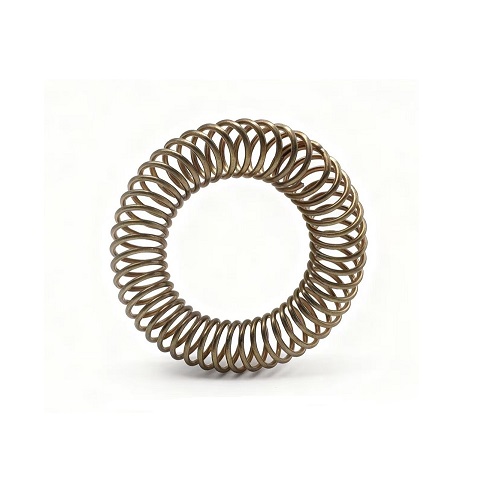
Canted coil springs differ from traditional compression springs because each coil is angled, allowing the spring to deliver near-constant force across a wide deflection range. To achieve this performance, the material must offer:
- High elastic limit
- Excellent fatigue resistance
- Stable mechanical properties over time
- Corrosion and oxidation resistance
Stainless steel meets these requirements better than most alloys, making it a preferred material for canted coil springs in demanding industries.
Common Stainless Steel Grades Used in Canted Coil Springs
301 Stainless Steel
301 stainless steel is known for its high tensile strength after cold working.
Key advantages:
- High strength and hardness
- Good fatigue resistance
- Cost-effective for high-volume production
Typical applications:
- Light-duty mechanical canted coil springs
- Consumer electronics
- Low-corrosion environments
Limitations:
- Lower corrosion resistance than 304 or 316
302 Stainless Steel
302 stainless steel is one of the most widely used materials for canted coil springs.
Key advantages:
- Balanced strength and ductility
- Good corrosion resistance
- Stable spring performance
Typical applications:
- Electrical contact springs
- General industrial canted coil springs
Limitations:
- Not ideal for highly corrosive environments
304 Stainless Steel
304 stainless steel offers excellent corrosion resistance and is often chosen when environmental stability is critical.
Key advantages:
- Excellent corrosion and oxidation resistance
- Good formability
- Suitable for clean and humid environments
Typical applications:
- Medical devices
- Food-grade and cleanroom equipment
- EMI shielding canted coil springs
Limitations:
- Lower strength compared to 301 and 17-7PH
316 Stainless Steel
316 stainless steel is the best choice for harsh or corrosive environments.
Key advantages:
- Superior corrosion resistance, especially against chlorides
- Excellent chemical stability
- Long service life
Typical applications:
- Marine equipment
- Chemical processing
- Outdoor EMI shielding and sealing systems
Limitations:
- Higher material cost
- Slightly lower spring strength
17-7PH Stainless Steel
17-7 precipitation-hardened stainless steel is often considered the best stainless steel for high-performance canted coil springs.
Key advantages:
- Very high strength and elastic limit
- Outstanding fatigue resistance
- Stable performance under high loads
Typical applications:
- Aerospace and defense
- Semiconductor equipment
- High-cycle electrical contact springs
Limitations:
- More complex heat treatment
- Higher cost than standard austenitic grades
Stainless Steel Comparison Table for Canted Coil Springs
| Stainless Steel Grade | Strength | Corrosion Resistance | Fatigue Life | Typical Use |
|---|---|---|---|---|
| 301 | High | Moderate | Good | Light-duty springs |
| 302 | Medium | Good | Good | General-purpose |
| 304 | Medium | Very Good | Medium | Medical, EMI |
| 316 | Medium | Excellent | Medium | Marine, chemical |
| 17-7PH | Very High | Good | Excellent | Aerospace, high-cycle |
How to Choose the Best Stainless Steel for Canted Coil Springs
When selecting stainless steel for canted coil springs, consider the following factors:
- Operating environment: Moisture, chemicals, salt spray
- Load and deflection requirements: Constant force vs. high load
- Cycle life: High-cycle or static application
- Industry standards: Medical, aerospace, or military compliance
For general applications, 302 or 304 stainless steel is sufficient. For corrosive environments, 316 stainless steel is preferred. For high-performance or precision applications, 17-7PH stainless steel is often the best choice for canted coil springs.
Product Description: Stainless Steel Canted Coil Springs
Our stainless steel canted coil springs are engineered for precision, durability, and consistent force output. Available in 301, 302, 304, 316, and 17-7PH stainless steel, these springs can be customized to meet exact groove dimensions, load requirements, and environmental conditions.
Designed for EMI shielding, electrical contacts, sealing, latching, and locking applications, our canted coil springs offer long fatigue life, excellent corrosion resistance, and reliable performance in demanding industries such as aerospace, medical, electronics, and semiconductor manufacturing.
Why HANDA Chooses the Right Stainless Steel for Canted Coil Springs
At HANDA, material selection is a core part of our engineering philosophy. With decades of experience in precision spring manufacturing, we understand that the performance of canted coil springs depends not only on design, but also on choosing the optimal stainless steel for each application.
HANDA offers custom canted coil springs manufactured from premium stainless steel grades, including 301, 302, 304, 316, and 17-7PH. Each material is carefully evaluated based on load requirements, cycle life, corrosion resistance, and operating environment. From standard industrial applications to high-reliability aerospace and semiconductor systems, HANDA ensures consistent force output, long fatigue life, and stable performance.
Our engineering team works closely with customers to recommend the best stainless steel solution, helping reduce system complexity while improving reliability and service life.
HANDA Stainless Steel Canted Coil Springs
HANDA stainless steel canted coil springs are precision-engineered to deliver consistent force, excellent elastic recovery, and long-term reliability. Manufactured using high-quality stainless steel materials such as 301, 302, 304, 316, and 17-7PH, these springs are designed to perform in demanding mechanical, electrical, and EMI shielding applications.
Unlike traditional compression springs, HANDA canted coil springs feature angled coils that provide near-constant force over a wide deflection range. This unique structure allows for superior performance in sealing, electrical contact, latching, locking, and grounding applications. Depending on application needs, HANDA offers solutions optimized for high-cycle fatigue, corrosion resistance, or high-load stability.
For general-purpose applications, 302 and 304 stainless steel provide a balanced combination of strength and corrosion resistance. In harsh or corrosive environments, 316 stainless steel ensures long service life and chemical stability. For high-performance systems requiring exceptional fatigue resistance and elastic limits, 17-7PH stainless steel is the preferred choice.
HANDA canted coil springs are available in custom diameters, cross-sections, and load ranges, with optional surface treatments and plating. Every spring is manufactured under strict quality control to ensure consistent performance across industries such as aerospace, medical devices, electronics, and semiconductor equipment.
FAQ
FAQ: Stainless Steel Canted Coil Springs by HANDA
Q1: Which stainless steel does HANDA recommend for most canted coil spring applications?
For general industrial and electrical applications, HANDA typically recommends 302 or 304 stainless steel, offering reliable performance and good corrosion resistance.
Q2: What is the best stainless steel for high-cycle canted coil springs?
For high-cycle and high-load applications, 17-7PH stainless steel is the best choice due to its superior fatigue resistance and elastic strength.
Q3: Are HANDA canted coil springs suitable for corrosive environments?
Yes. HANDA manufactures canted coil springs using 316 stainless steel, which provides excellent resistance to corrosion, chemicals, and salt spray.
Q4: Can HANDA provide custom stainless steel canted coil springs?
Absolutely. HANDA specializes in custom canted coil springs, tailored to groove dimensions, force requirements, and environmental conditions.