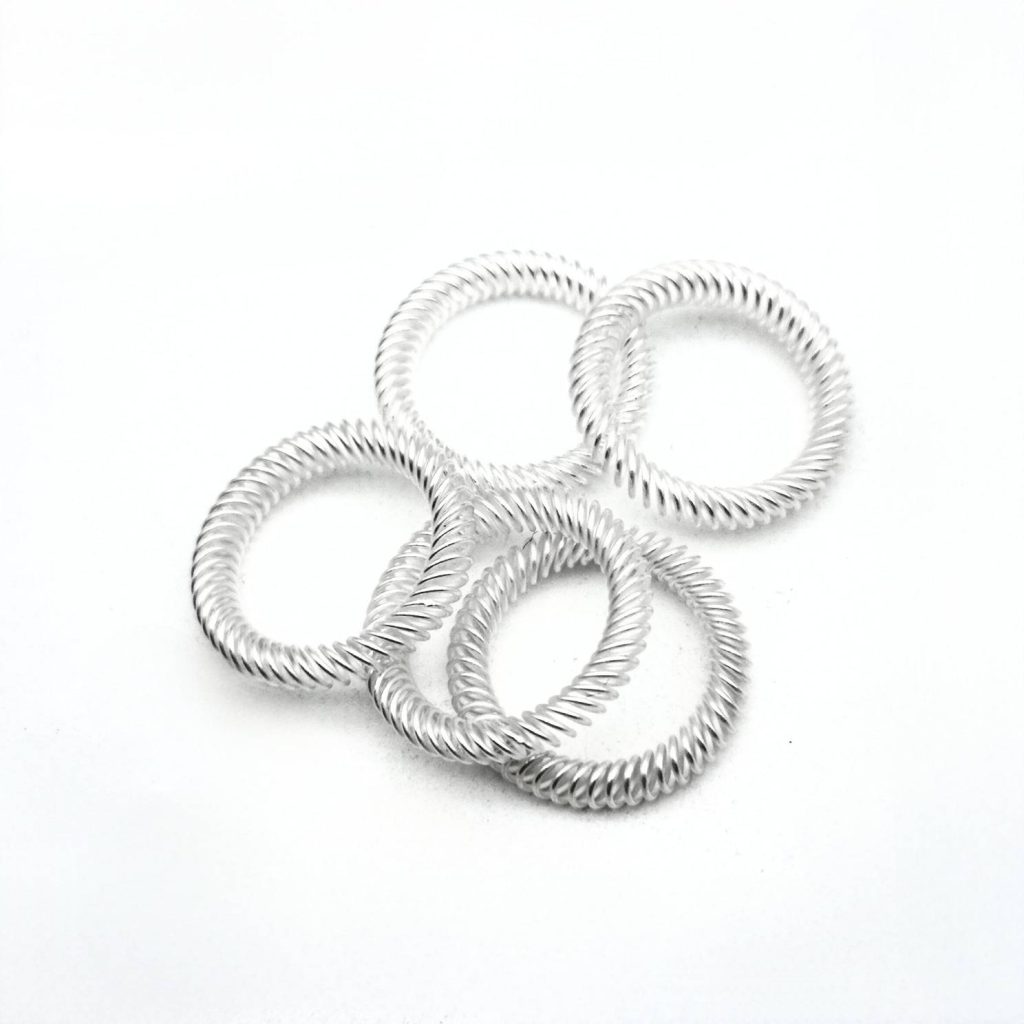
Materials for Canted Coil Springs: BeCu vs Stainless Steel Comparison Guide
Explore the best materials for canted coil springs. Compare beryllium copper vs stainless steel in strength, conductivity, corrosion resistance, and applications. A complete material selection guide by HANDA.

Material selection is one of the most critical decisions in the design of コイルスプリング. Because these springs are used in precision applications such as EMI shielding, electrical contacts, sealing, and latching, the chosen material directly affects spring force stability, fatigue life, conductivity, and environmental resistance.
で HANDA, we primarily manufacture canted coil springs using ベリリウム銅(BeCu) そして ステンレス鋼 alloys. Each material offers distinct advantages depending on mechanical and electrical requirements. This pillar page explains how to choose the right material and provides a detailed comparison between BeCu and stainless steel canted coil springs.
Common Materials Used in Canted Coil Springs
1. Beryllium Copper (BeCu)
Beryllium copper is a high-performance copper alloy widely used in electrical and EMI shielding canted coil springs.
Key properties:
- 優れた導電性
- High elastic limit and fatigue resistance
- Non-magnetic
- Low contact resistance
BeCu canted coil springs are ideal for applications requiring both stable mechanical force and reliable electrical performance.
2. Stainless Steel
Stainless steel remains one of the most versatile materials for コイルスプリング, offering a wide range of grades to meet different needs.
Common grades used by HANDA:
- 301 / 302 – high strength, cost-effective
- 304 – good corrosion resistance
- 316 – excellent resistance to chemicals and salt spray
- 17-7PH – high fatigue strength and elastic stability
Stainless steel canted coil springs are preferred when mechanical durability and corrosion resistance are the primary concerns.
BeCu vs Stainless Steel: Canted Coil Springs Comparison
Mechanical Performance
Beryllium copper provides excellent fatigue resistance and maintains consistent spring force under repeated compression cycles. Stainless steel, especially 17-7PH, offers higher load capacity and is better suited for high-force applications.
Electrical Performance
BeCu significantly outperforms stainless steel in electrical conductivity. For EMI shielding, grounding, and electrical contact canted coil springs, BeCu ensures low resistance and stable signal transmission.
耐環境性
Stainless steel grades such as 316 provide superior corrosion resistance in harsh environments. BeCu performs well in most conditions but may require plating in extreme chemical exposure.
Comparison Table: BeCu vs Stainless Steel Canted Coil Springs
| プロパティ | ベリリウム銅 | ステンレス鋼 |
|---|---|---|
| 電気伝導率 | 素晴らしい | 低い |
| Fatigue Life | 素晴らしい | Good to Excellent |
| 耐食性 | グッド | Very Good to Excellent |
| 磁気特性 | Non-magnetic | Mostly non-magnetic |
| High Load Capability | ミディアム | High (17-7PH) |
| 代表的なアプリケーション | EMI, electrical contacts | Mechanical, sealing |
How to Choose the Right Material for Your Canted Coil Spring
When selecting materials for コイルスプリング, engineers should evaluate:
- Electrical vs mechanical priority
- Operating environment (humidity, chemicals, salt spray)
- Required cycle life
- Load and deflection range
General recommendation:
- 選ぶ beryllium copper canted coil springs for EMI shielding and electrical contact applications
- 選ぶ stainless steel canted coil springs for high-load or corrosive environments
HANDA Material Expertise in Canted Coil Springs
で HANDA, we do not offer one-size-fits-all solutions. Our engineers analyze each application to determine the optimal material—whether BeCu, stainless steel, or advanced alloys such as MP35N or Inconel®. Every HANDA canted coil spring is manufactured to deliver consistent force, long fatigue life, and application-specific reliability.
Product Description (≈300 Words)
HANDA Canted Coil Springs – Material Options
HANDA manufactures precision コイルスプリング using beryllium copper and a wide range of stainless steel alloys to meet diverse industrial requirements. Our springs are designed to provide near-constant force over a wide deflection range, ensuring reliable performance in both mechanical and electrical applications.
Beryllium copper canted coil springs are optimized for EMI shielding, electrical contact, grounding, and RF applications. With excellent conductivity and fatigue resistance, BeCu springs maintain low contact resistance and stable force over millions of cycles.
Stainless steel canted coil springs from HANDA are available in 301, 302, 304, 316, and 17-7PH grades. These materials offer outstanding corrosion resistance, mechanical strength, and long service life, making them ideal for sealing, latching, locking, and high-load applications.
All HANDA canted coil springs are fully customizable in diameter, cross-section, load range, and material selection. Manufactured under strict quality control standards, they serve aerospace, medical, electronics, semiconductor, and industrial markets worldwide.
FAQ: Materials for Canted Coil Springs
Q1: Which material is best for EMI shielding canted coil springs?
Beryllium copper is generally the best choice due to its high conductivity and low contact resistance.
Q2: Are stainless steel canted coil springs suitable for corrosive environments?
Yes. Grades like 316 stainless steel offer excellent corrosion resistance.
Q3: Can HANDA customize material selection?
Yes. HANDA provides fully customized canted coil springs based on application requirements.
結論
Understanding material differences is essential when designing コイルスプリング. By comparing beryllium copper vs stainless steel, engineers can select the best solution for performance, reliability, and longevity. With deep material expertise, HANDA delivers optimized canted coil spring solutions for every application.
CONTACT US