How Improper Groove Design Causes Canted Coil Spring Failure
Improper groove design is a leading cause of canted coil spring failure. Learn how groove depth, width, tolerance, and surface finish affect performance—and discover proven design fixes to extend spring life.
Einführung
Kantige Schraubenfedern are widely valued for their ability to provide nearly constant force across a broad deflection range. They are commonly used in spring-energized seals, electrical contacts, and precision mechanical assemblies. However, many field failures blamed on the spring itself actually originate from improper groove design.
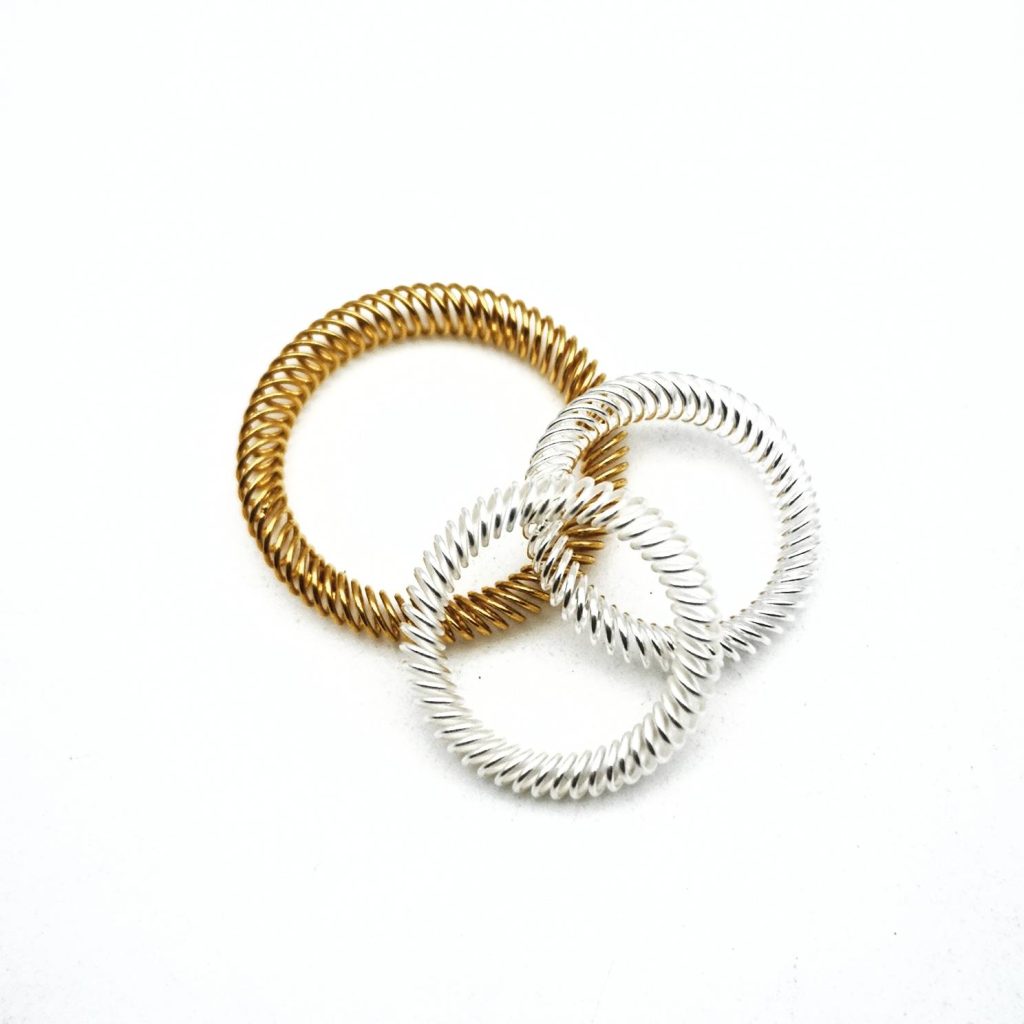
The groove is not just a housing feature—it is a critical functional component that directly controls spring compression, stability, and load distribution. Even small dimensional errors can push a canted coil spring outside its optimal operating window, resulting in premature fatigue, force loss, or seal leakage.
Understanding how improper groove design causes Schrägzugfeder failure is essential for engineers who want reliable, long-life performance.
The Role of Groove Design in Spring Performance
A properly engineered groove performs several vital functions:
- Maintains correct spring compression
- Prevents lateral movement
- Controls contact force
- Accommodates thermal expansion
- Supports dynamic motion
- Prevents extrusion under pressure
When groove geometry is incorrect, the spring cannot operate within its designed load-deflection range.
Failure Mechanism Overview
Below is a simplified cause-and-effect relationship.
| Groove Design Error | Immediate Effect | Long-Term Failure |
|---|---|---|
| Groove too deep | Low compression | Loss of contact force |
| Groove too shallow | Over-compression | Plastic deformation |
| Groove too wide | Spring instability | Uneven wear |
| Groove too narrow | Binding | Coil damage |
| Poor surface finish | High friction | Accelerated fatigue |
| No venting | Pressure buildup | Seal lift or extrusion |
Key Ways Improper Groove Design Causes Failure
1. Insufficient Compression from Excessive Groove Depth
What happens
When the groove depth is too large, the spring is under-compressed.
Failure chain
Low compression → Reduced contact force → Micro-leakage → System failure
Typical symptoms
- Weak sealing force
- Intermittent electrical contact
- Early performance drop
Engineering insight
Canted coil springs rely on controlled deflection. Even a 5–10% reduction in compression can significantly reduce force output.
2. Over-Compression from Shallow Groove Design
What happens
A groove that is too shallow forces the spring beyond its elastic range.
Failure chain
Overstress → Plastic set → Force decay → Premature fatigue
Warning signs
- Permanent spring height reduction
- Rising insertion force
- Early cracking or coil flattening
Critical risk
Repeated over-compression dramatically shortens cycle life.
3. Groove Width Errors and Spring Instability
Improper groove width is one of the most overlooked design problems.
If the groove is too wide:
- Spring may wander or roll
- Contact becomes non-uniform
- Localized wear develops
If the groove is too narrow:
- Spring binds during installation
- Coils distort
- Friction increases
Best practice range
Side clearance should typically allow controlled movement without lateral instability.
4. Tolerance Stack-Up: The Hidden Failure Driver
Many designs look correct at nominal dimensions but fail in production due to tolerance accumulation.
Example worst-case scenario
| Parameter | Nominal | Tolerance | Worst Case |
|---|---|---|---|
| Groove depth | 2.00 mm | ±0.05 | 2.05 mm |
| Spring height | 2.20 mm | ±0.05 | 2.15 mm |
| Actual compression | 0.20 mm | — | 0.10 mm |
Result: Up to 50% force loss.
Key takeaway
Always design using worst-case tolerance analysis—not nominal values.
5. Rough Groove Surface Finish
Surface finish directly affects friction and wear behavior.
Problems caused by rough grooves
- Increased drag
- Jacket damage in spring-energized seals
- Debris generation
- Accelerated fatigue
Recommended surface finish
| Application Type | Recommended Ra |
|---|---|
| Static sealing | ≤ 1.6 μm |
| Dynamic sealing | ≤ 0.8 μm |
| High-cycle electrical | ≤ 0.4 μm |
6. Sharp Corners and Edge Damage
Sharp groove edges create stress concentrations and mechanical interference.
Failure modes
- Seal jacket cutting
- Spring snagging during assembly
- Local overstress points
- Early crack initiation
Design fix
Always include proper corner radii compatible with the seal and spring geometry.
7. Groove Overfill or Underfill
Groove fill percentage is frequently misunderstood.
Formula
Groove Fill = Spring Area ÷ Groove Area
Recommended range: 70–85%
Overfill (>85%)
- Spring cannot flex properly
- Risk of solid height lock
- Excessive stress
Underfill (<70%)
- Spring instability
- Rolling or twisting
- Uneven force distribution
8. Pressure Trapping Due to Poor Venting
In high-pressure environments, trapped pressure behind the seal can dramatically alter spring behavior.
What happens
Pressure buildup → Seal lift → Spring extrusion → System leakage
This is especially critical in:
- Hydraulic systems
- Subsea equipment
- High-pressure valves
Design recommendation
Provide vent paths where pressure entrapment is possible.
9. Thermal Expansion Mismatch
Temperature changes can significantly alter compression.
Common oversight
Design validated only at room temperature.
Real-world effects
| Temperature Change | Potential Impact |
|---|---|
| High temperature | Over-compression |
| Low temperature | Loss of force |
| Thermal cycling | Fatigue acceleration |
Engineering tip
Always evaluate the full operating temperature range and material CTE differences.
10. Misalignment and Eccentric Loading
Perfect concentricity rarely exists in real assemblies.
When misalignment occurs
- One side of the spring is over-compressed
- Opposite side under-loaded
- Local fatigue develops
Symptoms
- Uneven wear pattern
- Local leakage
- Early spring failure
Design mitigation
- Allow eccentricity tolerance
- Use wider-deflection spring series
- Perform stack-up analysis
Real-World Failure Case Study
Anwendung: High-pressure valve
Problem: Seal leakage after short service time
Root cause: Groove depth tolerance too large
Findings
- Nominal compression: 20%
- Worst-case compression: 8%
- Actual contact force dropped by ~45%
Corrective action
- Tightened groove tolerance
- Adjusted groove depth
- Added tolerance analysis to design process
Result: Service life increased more than 3×.
Design Checklist to Prevent Groove-Induced Failure
Before releasing your design, verify:
- Correct compression percentage achieved
- Groove width provides controlled lateral support
- Worst-case tolerance analysis completed
- Surface finish meets application needs
- Corner radii properly specified
- Groove fill within 70–85%
- Thermal effects evaluated
- Pressure venting considered
- Assembly misalignment accounted for
- Spring supplier data reviewed
Why Engineers Trust HANDA
HANDA specializes in high-performance schräge Schraubenfedern and provides full application engineering support. Our experience shows that most spring failures are preventable through proper groove design validation.
HANDA support includes:
- Custom groove recommendations
- Load-deflection analysis
- Material selection guidance
- Tolerance review
- Application-specific optimization
By working closely with customers early in the design phase, HANDA helps eliminate costly redesigns and field failures.
Schlussfolgerung
Improper groove design is one of the most common—and most preventable—causes of Schrägzugfeder failure. Issues such as incorrect depth, poor tolerance control, inadequate surface finish, and improper fill ratio can drastically reduce spring performance and service life.
The good news is that these failures are avoidable. With proper engineering analysis, tolerance management, and collaboration with experienced manufacturers like HANDA, engineers can ensure their canted coil springs deliver reliable, long-term performance even in the most demanding environments.
Early groove validation is not an extra step—it is essential insurance against failure.