Contact Shielding Fingerstrip: The Ultimate Guide to EMI Shielding, Grounding & Applications
Discover the complete engineering guide to contact shielding fingerstrip—its EMI shielding principles, beryllium copper materials, critical applications, and selection criteria. Learn how fingerstock gaskets deliver reliable grounding and shielding for aerospace, telecom, medical, and defense electronics.
Introduction
In today‘s densely packed electronic environments, electromagnetic interference (EMI) poses a constant threat to system reliability. From avionics bay doors that must block High-Intensity Radiated Fields (HIRF) to 5G base stations requiring intermodulation distortion control, maintaining a continuous conductive path between mating surfaces is essential. One of the most proven solutions for this challenge is contact shielding fingerstrip—also known as fingerstock gaskets, EMI spring contacts, or grounding strips.
This comprehensive guide explores the engineering principles behind fingerstock, its material advantages, key applications across industries, and how to select the right product for your specific requirements.
What Is Contact Shielding Fingerstrip?
Contact shielding fingerstrip is a precision-engineered conductive component consisting of a series of flexible metal “fingers“ that compress upon installation, creating a low-impedance path for electrical current while blocking RF leakage typically from 10 MHz up to 40 GHz. These spring-like strips are placed between two mating surfaces—such as an enclosure door and its frame, or a printed circuit board (PCB) and a card guide—to establish reliable electrical contact and shield against electromagnetic interference.
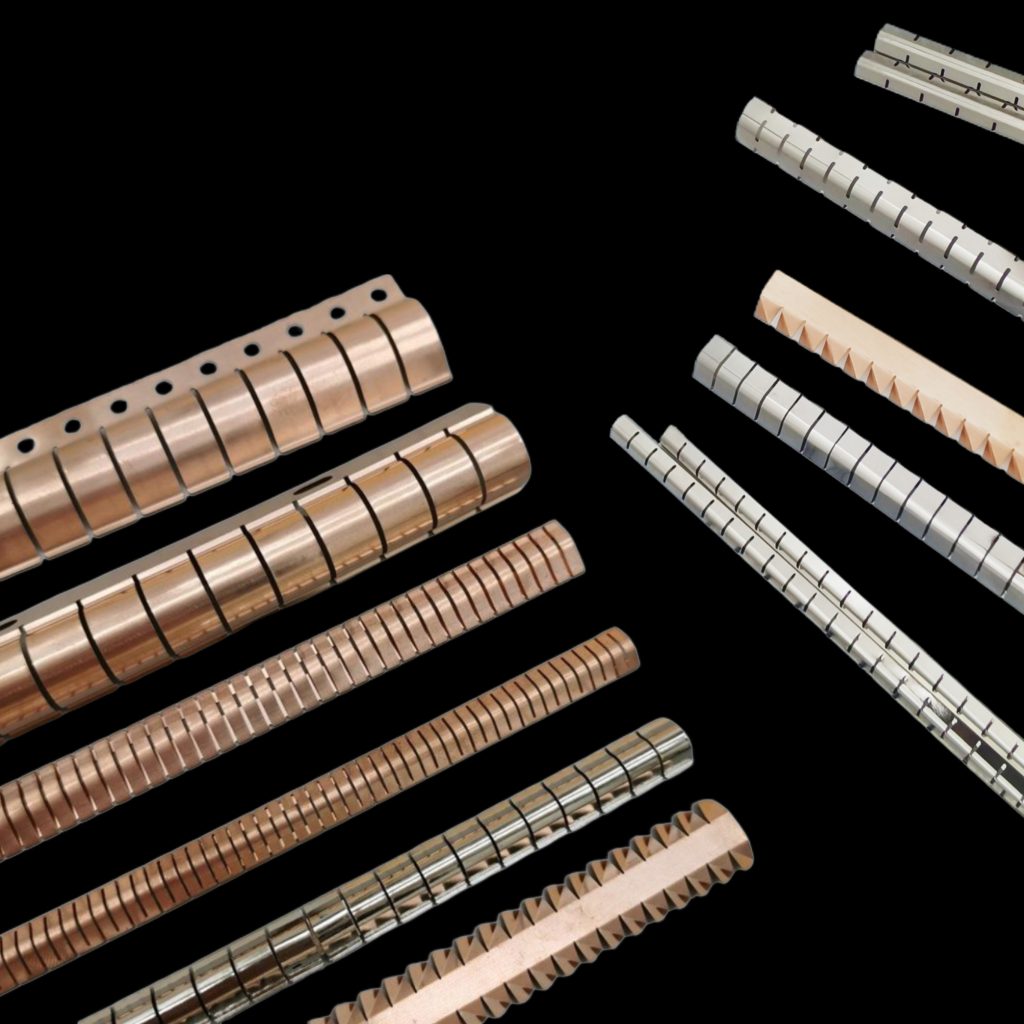
The “finger“ design provides multiple points of contact, ensuring resilience and strong connectivity across thousands of open/close cycles. When an enclosure door closes, the fingers compress and create a wiping action that helps break through surface oxides, maintaining low contact resistance over the product’s lifetime.
How Fingerstock Compares to Other EMI Gaskets
Not all EMI gaskets are created equal. Different gasket types serve different application needs. The table below compares fingerstock against other common shielding solutions.
| Gasket Type | Material | Key Advantages | Key Disadvantages | Best Applications |
|---|---|---|---|---|
| Fingerstock | BeCu or stainless steel | High shielding effectiveness (100–115+ dB), excellent durability, handles repeated open/close cycles, sliding contact allowed | Higher cost, no environmental sealing, can be damaged by over-compression | Doors, access panels, sliding interfaces, high-cycle applications |
| Conductive Elastomer | Silicone with metal filler | Provides both EMI and environmental sealing, corrosion resistant | Hard, high price, may not pierce oxide layers on metal surfaces | Environmental sealing with EMI protection |
| Fabric-over-Foam | Conductive fabric on foam core | Low price, soft, easy to install, not easily damaged by over-compression, adhesive backing | Frequent friction damages conductive surface, lower durability | General-purpose, cost-sensitive applications |
| Spiral Tube | BeCu or stainless steel spiral | Highest shielding efficiency of all types, low price | Easily damaged by excessive compression | High-performance shielding where compression is controlled |
| Wire Mesh | Monel, BeCu, or tin-plated steel wire | Low price, not easily damaged by over-compression | Low shielding efficiency at high frequencies | Low-frequency applications (<1 GHz), cost-sensitive |
Data adapted from comparison of electromagnetic sealing gaskets.
Core Materials: Why Beryllium Copper Dominates
The most common material for high-performance fingerstock is beryllium copper (BeCu), specifically alloy C17200. Beryllium copper offers an unmatched combination of properties for EMI shielding applications.
Key Advantages of Beryllium Copper
BeCu fingerstock is manufactured by punching or etching thin strip material, then pressing and forming it into the required final shape, followed by heat treatment to impart “memory“—the ability to return to its original shape after compression. This makes BeCu ideally suited for applications requiring frequent access, such as shielded room doors and access panels.
Stainless Steel as an Alternative
For applications that are mechanically less demanding, stainless steel fingerstock offers a more economical option. While stainless steel provides good tensile strength and an extreme operating temperature range, it has higher compression set than beryllium copper when used in demanding applications. This means stainless steel is more likely to lose its spring force over time under sustained compression.
Plating Options and Corrosion Protection
Plating serves two critical functions: enhancing electrical conductivity and providing galvanic compatibility with mating surfaces. Different base materials and operating environments require different plating solutions.
| Plating Type | Specification | Thickness (min) | Best Suited For |
|---|---|---|---|
| Clean & Bright (Unplated) | N/A | N/A | General indoor use where galvanic corrosion is not a concern |
| Bright Nickel | QQ-N-290, Class 2 | 0.0001“ (0.0025 mm) | Hard, wear-resistant surface; good corrosion protection |
| Bright Tin (99%+) | ASTM B545 | 0.0001“ (0.0025 mm) | Solderability, general corrosion protection |
| Electroless Nickel | MIL-C-26074, Class 1 | 0.0001“ (0.0025 mm) | Uniform coating on complex shapes; high corrosion resistance |
| Silver | Similar to QQ-S-365 | 0.0001“ (0.0025 mm) | Highest conductivity; high-power applications |
| Tin-Lead (60/40) | ASTM B579 | 0.0001“ (0.0025 mm) | Excellent solderability (legacy applications; RoHS considerations apply) |
| Gold | MIL-G-45204, Type II, Class 1 | 0.00005“ (0.0013 mm) min | Superior conductivity and corrosion resistance; critical connections |
| Zinc/Clear Trivalent Chromate | Similar to ASTM B633 | 0.0001“ (0.0025 mm) | Galvanic compatibility with aluminum chassis |
Data adapted from Parker Chomerics SPRING-LINE® specifications.
Key design consideration: Over-compression can result in damaged fingers and loss of effectiveness. Always adhere to manufacturer-recommended compression ranges. Also, ensure galvanic compatibility with mounting surfaces—mixing dissimilar metals without appropriate plating can accelerate corrosion.
Shielding Effectiveness and Performance Data
Shielding effectiveness (SE) is the primary performance metric for EMI gaskets, measured in decibels (dB). Higher dB values indicate greater attenuation of electromagnetic interference.
Typical Fingerstock Shielding Performance
| Series / Configuration | Shielding Effectiveness | Test Condition |
|---|---|---|
| Twist Series (97-555, 97-558, 97-559) | > 100 dB | 100 MHz plane wave |
| Twist Series (97-550, 97-551, 97-560) | > 115 dB | 100 MHz plane wave |
| General Fingerstock | 60–120 dB | 100 MHz – 10 GHz |
| High-performance configurations | Up to 165 dB | Broad frequency range |
Data from Laird Technologies Twist Series datasheets and general EMI shielding sources.
In practical terms:
- 60–80 dB: Suitable for general commercial electronics
- 80–100 dB: Typical for industrial and telecom equipment
- 100–115 dB: High-reliability applications, aerospace, military
- >115 dB: Critical defense and aerospace systems requiring maximum protection
Broad frequency coverage: Fingerstock blocks RF leakage typically from 10 MHz up to 40 GHz, making it effective across most common EMI frequency ranges.
Mounting Options and Installation
One of the key advantages of fingerstock is the variety of mounting methods available, allowing engineers to match the installation method to the specific application constraints.
Installation best practices:
- Ensure mounting surfaces are clean and free of debris
- For adhesive mounting, allow sufficient cure time after application
- Pay special attention to corner installations to maintain continuous contact
- Avoid over-compression, which can permanently damage fingers
Critical Applications Across Industries
Contact shielding fingerstock serves mission-critical roles across numerous industries.
Aerospace and Defense
In aerospace, fingerstock seals avionics bay doors against HIRF (High-Intensity Radiated Fields) per DO-160G, while military vehicles use it to EMP-harden communication systems (MIL-STD-188-125). Fingerstock gaskets are widely used in avionics enclosures, radar modules, and satellite systems—their lightweight yet robust nature makes them suitable for aerospace-grade applications.
- Compliance standards: MIL-G-83528, IEC 61000-4-3/6, UL94V-0
- Temperature range: -55°C to +165°C for extreme flight conditions
Telecommunications and 5G Infrastructure
5G base stations deploy custom-shaped fingerstock to ground massive MIMO antenna panels, suppressing intermodulation distortion that would otherwise degrade signal quality. Fingerstock is also critical for shielding in data center server racks, achieving <1Ω contact resistance under EIA-364-23 testing.
Medical Devices
Medical imaging equipment integrates fingerstock to isolate MRI magnet bores from RF noise, complying with IEC 60601-1-2 for electromagnetic compatibility. Fingerstock contacts and gaskets are suitable for use in a variety of medical applications, including diagnostic equipment and patient monitoring systems.
Automotive Electronics
Modern vehicles contain dozens of electronic control units (ECUs), ADAS radar modules, and EV battery systems. Automotive electronics rely on fingerstock for grounding EV battery enclosures and shielding ADAS radar modules (ISO 11452-2). For demanding under-hood applications, high-temperature alloys like nickel-silver (C77000) can withstand 200°C in automotive turbocharger sensors.
Industrial and Data Center Equipment
Industrial control cabinets, EMC testing chambers, and data center server racks all require reliable EMI sealing. Fingerstock provides effective EMI shielding while allowing easy access for maintenance and inspection. Data centers apply it to EMI-gasketed server racks to maintain signal integrity in high-density environments.
Selection Guide: How to Choose the Right Fingerstock
Step 1: Define Shielding Requirements
- Frequency range: Most fingerstock is effective from 10 MHz to 40 GHz
- Required shielding effectiveness: 60 dB for basic commercial use; >115 dB for defense/aerospace
- EMI source: Determine whether you need to shield emissions or susceptibility
Step 2: Assess Application Environment
Step 3: Evaluate Mechanical Requirements
- Cycle life: How many open/close cycles will the enclosure experience?
- Compression force: Fingerstock typically requires 50–500 g per finger
- Gap tolerance: Fingerstock‘s flexible fingers accommodate variations in mating surfaces
Step 4: Select Mounting Method
- Use the mounting options table above to match installation method to your application
Step 5: Specify Plating
- Match plating to the mating surface material to prevent galvanic corrosion
- For high-reliability applications, specify 0.8 μm gold over nickel
Frequently Asked Questions
What is the typical lifespan of a fingerstock gasket?
With proper material selection (beryllium copper) and correct compression, fingerstock can handle thousands of open/close cycles without significant wear. In normal indoor environments, service life of 10+ years is typical.
Can fingerstock be used for both EMI shielding and grounding?
Yes. Fingerstock provides both functions simultaneously. The low-impedance conductive path serves as both an EMI seal and a grounding path for electrostatic discharge (ESD).
Is fingerstock suitable for environmental sealing?
No. Fingerstock provides EMI shielding but does not provide an environmental seal against dust or moisture. For applications requiring both EMI and environmental protection, consider adding a separate environmental gasket or using a combination product like the Poron® rubber gasket integrated with fingerstock.
How does fingerstock compare to conductive fabric-over-foam?
Fingerstock typically offers higher shielding effectiveness (100–115+ dB vs. 60–90 dB) and better durability for high-cycle applications. However, fabric-over-foam is lower cost, provides some environmental sealing, and is less easily damaged by over-compression. The choice depends on whether performance or cost is the priority.
What standards do fingerstock gaskets comply with?
High-quality fingerstock gaskets comply with applicable EMI shielding guidelines including MIL-G-83528, IEC 61000-4-3/6, UL94V-0 (flammability), RoHS (hazardous substances), and MIL-STD-285/IEEE-299 for shielding effectiveness testing.
Conclusion
Contact shielding fingerstock is a proven, versatile solution for EMI shielding and grounding across a wide range of industries. Its unique combination of beryllium copper‘s mechanical strength and electrical conductivity, paired with flexible mounting options and broad plating choices, makes it the go-to choice for applications requiring:
- High shielding effectiveness (100–115+ dB)
- Frequent access (doors, panels, sliding interfaces)
- Extreme temperature operation (-55°C to +165°C)
- Long cycle life (thousands of open/close cycles)
By understanding the material properties, plating requirements, mounting options, and performance data outlined in this guide, engineers can confidently select fingerstock solutions that deliver reliable electromagnetic compatibility throughout the product lifecycle.
Need assistance selecting the right contact shielding fingerstock for your application? Contact our engineering team for material recommendations, plating guidance, and custom design support.