How to Select Spiral Tubes for Low Temperature Applications: A Complete Engineering Guide
소개
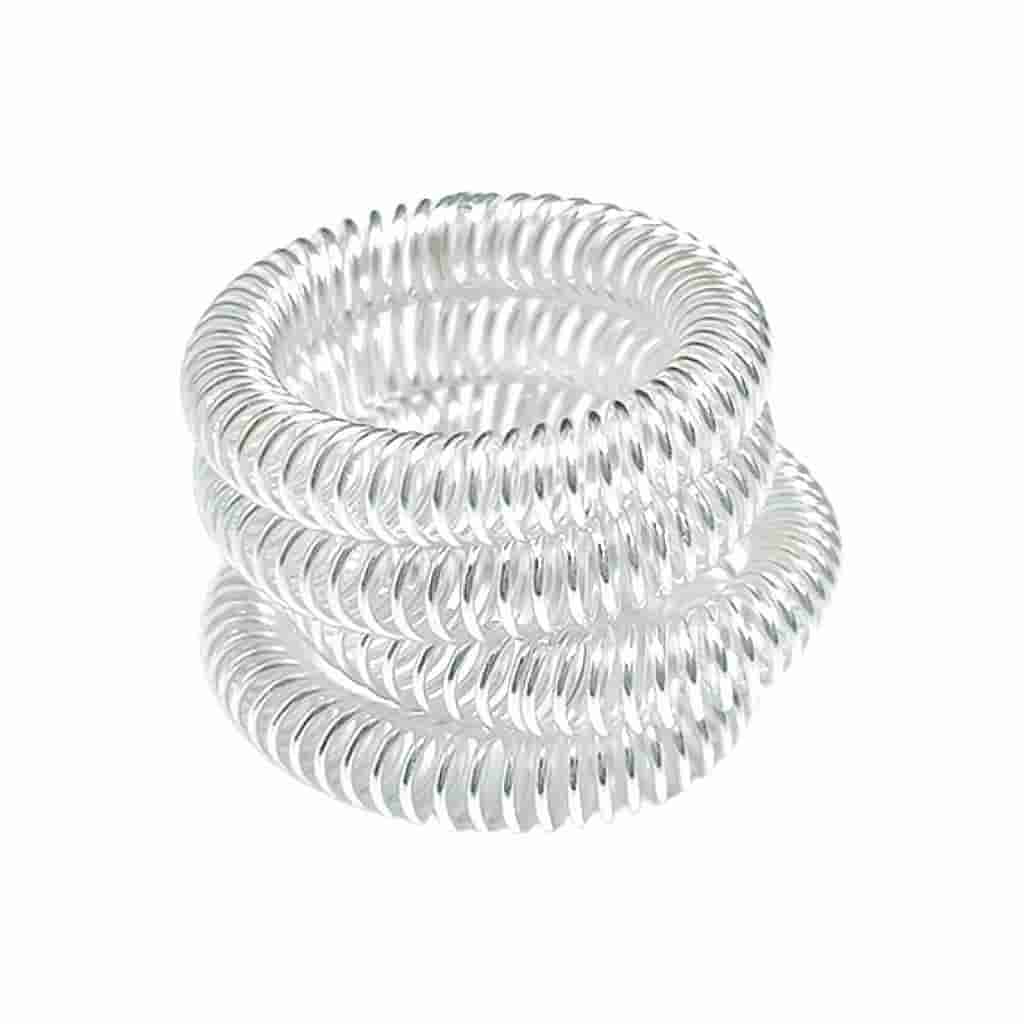
For EMI engineers, selecting a Spiral Tube for low temperature applications requires more than choosing a cold-resistant material. The key is maintaining stable electrical contact and shielding performance under extreme conditions, where factors such as thermal contraction, material compatibility, dimensional changes, compression variation, oxidation, and thermal cycling reliability can affect the entire shielding system. Since the Spiral Tube works together with the mounting groove and enclosure, engineers must ensure reliable contact is maintained throughout temperature changes.
1.Define the Actual Temperature Range Before Selecting a Spiral Tube
Low Temperature” Is Not a Single Design Condition,One of the most common mistakes in engineering projects is describing an application simply as “low temperature.”In reality, -40°C, -80°C, and -196°C represent completely different design challenges.The first step in Spiral Tube selection is to define the actual operating environment.
| 애플리케이션 환경 | 일반적인 온도 범위 | Main Design Focus |
|---|---|---|
| Outdoor electronic equipment | Around -40°C | Contact stability, corrosion resistance |
| Industrial and semiconductor equipment | -60°C to -80°C | Thermal cycling, dimensional stability |
| Cryogenic systems | Below -100°C | Material behavior, thermal contraction |
| Liquid nitrogen environments | Around -196°C | Low-temperature verification, material compatibility |
Before selecting a Spiral Tube, engineers should confirm:
- Minimum operating temperature
- Maximum operating temperature
- 열 순환 빈도
- Low-temperature holding time
- Cooling and heating rate
- Installation environment
For example:A device that occasionally operates at -40°C is very different from a semiconductor testing system that repeatedly cycles between:
25°C → -80°C → 25°C hundreds of times.The second application requires much more attention to:
- Material fatigue
- Relative thermal movement
- Contact stability after repeated cycling
2.Material Selection Guide for Low Temperature Spiral Tubes
For EMI shielding Spiral Tubes, commonly considered materials include:
- 베릴륨 구리(BeCu)
- 스테인리스 스틸
- 17-7PH
However, material selection should not simply follow the idea:“The higher the conductivity, the better the material.”The correct choice depends on the primary project requirement.A material with excellent conductivity may not always be the best solution if the application requires:
- High mechanical strength
- 내식성
- Extreme temperature stability
- Long-term thermal cycling reliability
The following table provides a practical engineering comparison:
| 재료 | Main Engineering Consideration | Typical Application Direction |
|---|---|---|
| BeCu | Electrical contact performance and mechanical flexibility | Applications requiring stable conductive contact |
| 스테인리스 스틸 | Strength, corrosion resistance, cost efficiency | Industrial and harsh environments |
| 17-7PH | High strength, fatigue resistance, corrosion resistance, and heat-treatability. | Highly demandAerospace, high-performance springs, seals, and high-stress components. |
| 티타늄 합금 | Lightweight and corrosion-resistant design | Special aerospace or advanced applications |
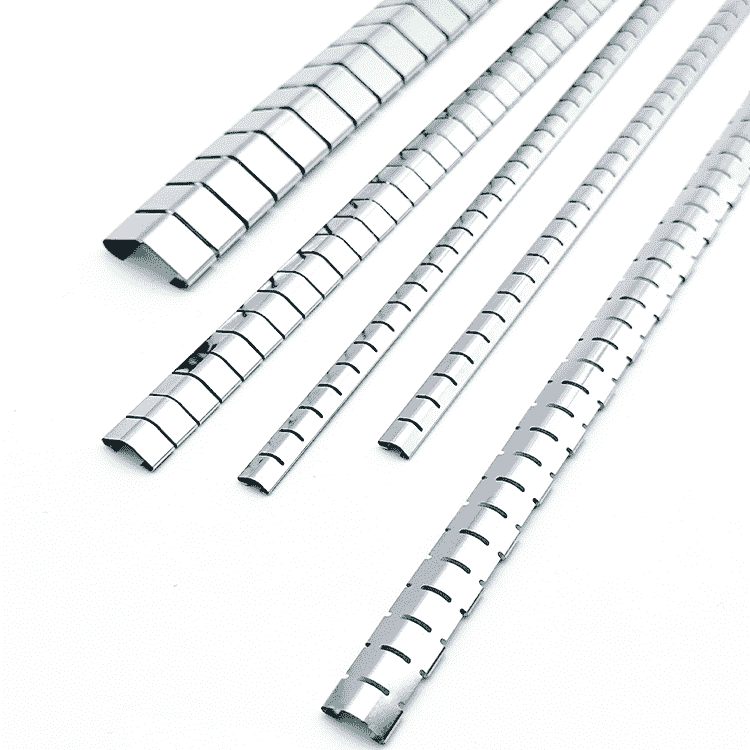
Handa’s Spiral EMI Shielding products support multiple material options, including:
- 베릴륨 구리
- 스테인리스 스틸
- Titanium Alloy
- Nickel-based alloys such as Inconel and Hastelloy for customized applications
Handa’s Spiral EMI Shielding products support multiple material options, including:
- 베릴륨 구리
- 스테인리스 스틸
- Titanium Alloy
- Nickel-based alloys such as Inconel and Hastelloy for customized applications
More information can be found here:https://www.handashielding.com/emi-shielding-spira/
3.Why BeCu Is Commonly Considered for EMI Spiral Tube Applications
Beryllium Copper (BeCu) is widely used in EMI shielding applications because it provides a balance between:
- 전기 전도성
- 기계적 강도
- Spring-like recovery characteristics
- Long-term contact reliability
For EMI shielding structures, electrical conductivity is important because the shielding component must provide a continuous low-impedance electrical path.However, conductivity alone does not determine EMI performance.The actual shielding behavior also depends on:
- Contact condition
- 표면 처리
- Installation geometry
- Compression level
- 주파수 범위
Therefore, the engineering evaluation should consider the complete structure rather than only the base material.

4.Why Doesn’t “25% Compression” Automatically Mean 25% Compression at Low Temperature?
This is an important distinction in low-temperature applications.Suppose a Spiral Tube is installed at 25°C using the recommended dimensions and achieves the desired compression condition.As the temperature decreases:
- The Spiral Tube changes dimension.
- The housing changes dimension.
- The installation groove changes dimension.
- Different materials may experience different amounts of thermal contraction.
Therefore:
A 25% compression condition at room temperature does not automatically mean that exactly the same geometric compression condition will be maintained at low temperature.For demanding low-temperature applications, it is therefore useful to evaluate at least three conditions:
| Condition | What Should Be Checked? |
| Room-temperature assembly | Initial compression, installation force, contact condition |
| Minimum temperature | Actual compression condition and electrical contact continuity |
| After thermal cycling | Permanent deformation, wear, and changes in contact condition |
The third condition is particularly important for equipment intended for long-term operation.A design may perform well during the first cooling cycle but experience changes in contact behavior after dozens or hundreds of thermal cycles.
5.Surface Treatment: Don’t Choose a Plating Only Because It Has the Highest Conductivity
Spiral Tubes may use surface treatments to improve contact performance, environmental resistance, corrosion resistance, or material compatibility.Depending on the product configuration, Handa can provide surface treatments including:
- Tin
- 니켈
- 실버
- 골드
- 패시베이션
- 아연
However, it would be overly simplistic to say:”Gold is the best, so gold should always be selected for low-temperature applications.”
In actual engineering design, the following factors should be considered together:“Base Material + Plating + Mating Material + Environment + Contact Requirement + Cost”,For some applications, the primary purpose of the surface treatment may be to improve resistance to oxidation or maintain stable electrical contact.For other applications, long-term environmental durability may be the more important consideration.Therefore, surface treatment should be evaluated as part of the overall electrical contact system rather than as an isolated parameter.
6.What Is Different About Selecting Spiral Tubes for -40°C, -80°C, and -196°C?
Low-temperature applications can be broadly divided into several engineering levels.
| Temperature Scenario | Main Risk | Selection Focus | Recommended Validation |
| Around -40°C | Low-temperature contraction and contact changes | Material + compression + groove dimensions | Low-temperature hold / cycling |
| Around -80°C | More significant thermal movement | Material compatibility + structural dimensions | Thermal cycling + contact testing |
| ≤ -100°C | Deep-low-temperature dimensional changes | Temperature-dependent material data + structural analysis | Low-temperature testing |
| Around -196°C | Cryogenic conditions | Material condition, thermal contraction, structural reliability | Actual cryogenic validation |
There is no simple rule that says:”-80°C always requires Material A, while -196°C always requires Material B.”
The actual design depends on:
- Spiral Tube dimensions
- Material condition
- Housing material
- 그루브 디자인
- 압축
- Number of thermal cycles
- Acceptable contact variation
A more accurate engineering approach is therefore:Temperature → Material → Relative Movement → Compression → Validation rather than:온도 →Material

7.Don’t Directly Apply Room-Temperature EMI Test Data to Low-Temperature Applications
Room-temperature EMI test data should not be directly applied to low-temperature applications.For example, if a Spiral Tube achieves a specific shielding effectiveness at 25°C, you should not claim the same performance at -80°C unless low-temperature test data is available.This is because low temperatures may affect material properties, electrical contact, and overall assembly continuity, which can influence shielding performance.
For applications requiring verified low-temperature EMI performance, testing may include:
Room-Temperature Test → Controlled Cooling → Minimum Temperature Hold → Low-Temperature Contact Check → Controlled Heating → Thermal Cycling → Post-Cycle EMI Test
8.What Information Should You Provide for an Actual Engineering Project?
If you are sourcing a Spiral Tube for semiconductor equipment, vacuum equipment, low-temperature electronics, or another demanding application, providing the following information at the beginning of the project can significantly improve the accuracy of the recommendation.
Temperature Conditions Mechanical Structure
- Minimum Temperature
- Maximum Temperature
- Normal Operating Temperature
- Thermal Cycling Frequency
- Low-Temperature Holding Time
- Spiral Tube OD
- 그루브 깊이
- 홈 너비
- Available Installation Space
- Compression Requirement
Materials Environmental Conditions
- Spiral Tube Material
- Housing Material
- Mating Surface Material
- EMI shielding requirement
- Electrical continuity requirement
- 주파수 범위
- Contact resistance requirement, if applicable
The more complete these parameters are, the more accurately the material, dimensions, and surface treatment can be evaluated.

9.How Can Handa Help You Select the Right Low-Temperature Spiral Tube?
For low-temperature and cryogenic applications, Spiral Tube selection should consider temperature, material, mechanical structure, and compression together—not just dimensions.Handa offers Spiral Shield solutions with different materials, tube diameters, compression conditions, and surface treatments. Customized designs are also available based on drawings and application requirements.
To recommend a suitable configuration, provide:Temperature + Housing Material + Groove Size + Spiral Tube OD + EMI Requirement。These parameters help determine the appropriate material, structure, and compression configuration for your application.